 2026-04-15
 Content
A thermal protector is a safety device designed to automatically shut off or limit current to an electrical component when its temperature exceeds a safe threshold. Think of it as a built-in guardian for your motors, appliances, and electronic equipment — one that steps in before heat causes permanent damage or, worse, a fire. Unlike a fuse, which responds to excess current, a thermal protector specifically responds to temperature, making it uniquely suited for applications where overheating is the primary concern.
These devices are embedded in everything from household hair dryers and refrigerator compressors to industrial motors and battery packs. The core job is simple: sense heat, act fast, and protect the equipment. Some thermal protectors reset automatically once the device cools down, while others require a manual reset or even full replacement after tripping — depending on the design and application.
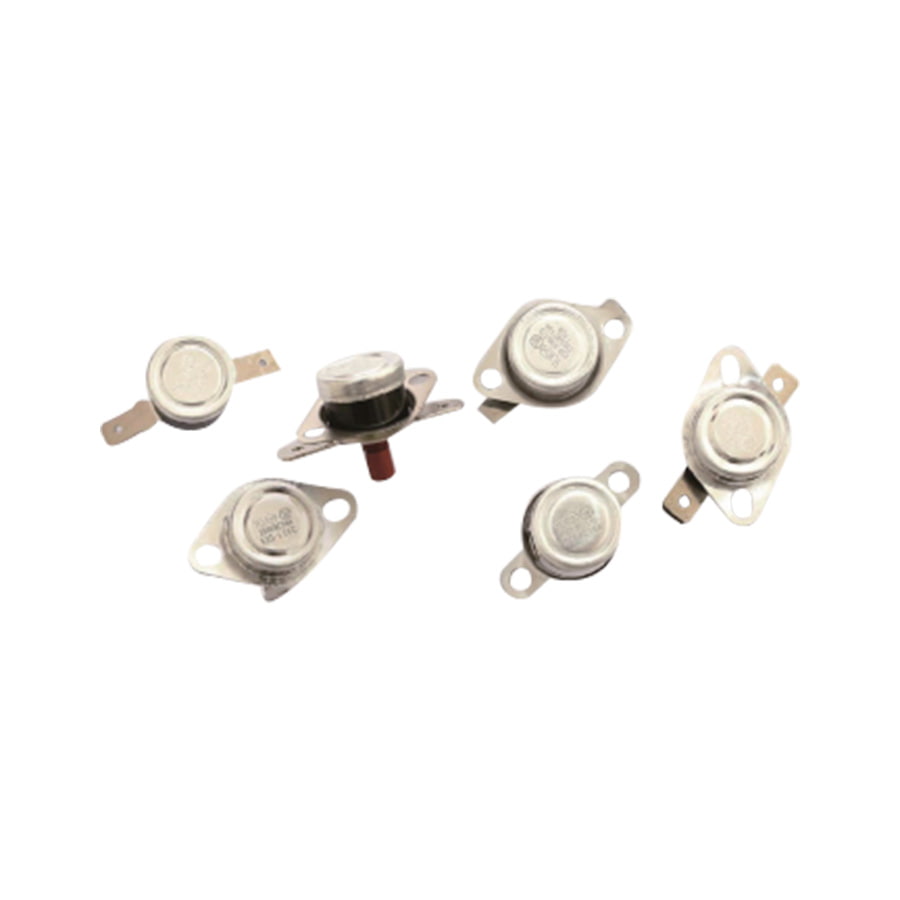
The operating principle of a thermal protector depends on its type, but most rely on a thermally sensitive element that physically changes state when a set temperature is reached. In the most common bimetal designs, two metals with different thermal expansion rates are bonded together. As temperature rises, the bimetal strip bends — and at the trip temperature, it snaps open the electrical contacts, cutting off the circuit.
In other designs, such as thermal cutoffs (TCOs), a fusible alloy or pellet melts at a precise temperature, permanently breaking the circuit. These are one-shot devices — once they trip, they must be replaced. More advanced designs use positive temperature coefficient (PTC) thermistors, which increase resistance dramatically at a specific temperature, effectively choking the current without fully disconnecting the circuit.
Regardless of the mechanism, the key performance parameters are the trip temperature (the point at which the device activates) and the reset temperature (the cooler point at which it restores normal operation). These are carefully engineered to match the thermal limits of the equipment being protected.
Not all thermal protectors are built the same. The right type depends on the application, the required trip temperature, whether automatic or manual reset is needed, and how often the device might trip during normal use. Here is a breakdown of the most widely used types:
These are the most prevalent type in consumer appliances and small motors. They use a bimetal disc or strip that snaps open when heated and can snap back once cooled. They are durable, cost-effective, and available in auto-reset or manual-reset versions. You'll find them in washing machine motors, power tools, and HVAC compressors.
Thermal cutoffs are one-time-use devices that permanently open the circuit when a specific temperature is reached. They are extremely reliable and do not suffer from wear-related drift in trip temperature. Because they cannot reset, they are used in high-risk applications like hair dryers, toasters, and transformers, where resetting could itself be dangerous.
Positive Temperature Coefficient thermistors don't break the circuit — they increase resistance so dramatically at the Curie temperature that current drops to a safe trickle. Once the device cools, resistance falls and current flows normally again. These are especially useful in motor start circuits and transformer protection where soft limiting is preferable to hard disconnection.
Modern systems increasingly use NTC (Negative Temperature Coefficient) thermistors or thermocouples paired with a microcontroller or dedicated IC to provide programmable overtemperature protection. These offer higher precision, data logging capability, and adjustable thresholds — common in battery management systems (BMS), server hardware, and EV powertrains.
Thermal overtemperature protection is required across a remarkably wide range of industries and product categories. Below is a summary of the most important application areas:
| Application | Typical Device Type | Reason for Protection |
| Electric motors (fans, pumps) | Bimetal thermal protector | Winding insulation breakdown |
| Hair dryers, curling irons | Thermal cutoff (TCO) | Fire risk from blocked airflow |
| Refrigerator compressors | Bimetal / auto-reset | Compressor motor overload |
| Lithium-ion battery packs | PTC / electronic BMS | Thermal runaway prevention |
| Transformers | TCO or bimetal | Core and winding overheating |
| HVAC systems | Electronic thermal sensor | Compressor and blower protection |
| Power tools | Bimetal / manual reset | Motor burnout under heavy load |
Selecting the wrong thermal protector is just as risky as having none at all. If the trip temperature is set too high, the device won't activate until after damage has already occurred. If it's set too low, it will trip during normal operation and become a nuisance. Here are the critical specs you need to evaluate:
This is one of the most common points of confusion. A thermal fuse — also called a thermal cutoff or TCO — is a one-time device that permanently opens when its rated temperature is exceeded. It cannot be reset; it must be replaced. A thermal protector, in the broader and most commonly used sense, refers to resettable devices (especially bimetal types) that can automatically or manually restore operation after cooling down.
In practice, the terms are sometimes used interchangeably in product listings and datasheets, which can cause confusion. The safest approach is always to check whether the device is resettable or non-resettable in the product's technical specifications — not to rely solely on the name. For critical safety applications, non-resettable thermal cutoffs are generally preferred because they force human inspection before the equipment is restarted.
If you suspect a thermal protector has tripped or failed, testing it is straightforward with a multimeter. Here's how to do it safely:
Frequent tripping is a symptom, not the root problem. If a thermal protector is activating repeatedly, investigate the following causes before simply resetting it again:
Even the best thermal protector will fail to do its job if it is installed incorrectly. These practical guidelines will help ensure reliable overtemperature protection in your application:
Regulatory bodies around the world mandate thermal protection in a wide range of product categories. In the United States, UL standards such as UL 547 (thermal protectors for motors) and UL 60730 (automatic electrical controls) define the test requirements and performance criteria that thermal protection devices must meet before they can be used in listed products. In Europe, the equivalent frameworks fall under EN/IEC standards, and products carrying the CE mark must demonstrate compliance with the relevant Low Voltage Directive requirements, which typically include verified overtemperature protection.
For manufacturers, this means thermal protectors cannot simply be selected from a catalog without validating that the chosen device is certified to the applicable standard. Using an uncertified part in a certified product can void the product's own certification, expose the manufacturer to liability, and create real safety risks in the field. Always verify that the component-level certification of the thermal protector matches the requirements of your end-product safety standard.
 Category

 English
 中文简体
中文简体 عربى
عربى Español
 +86-13861233850