 2026-07-02
 Content
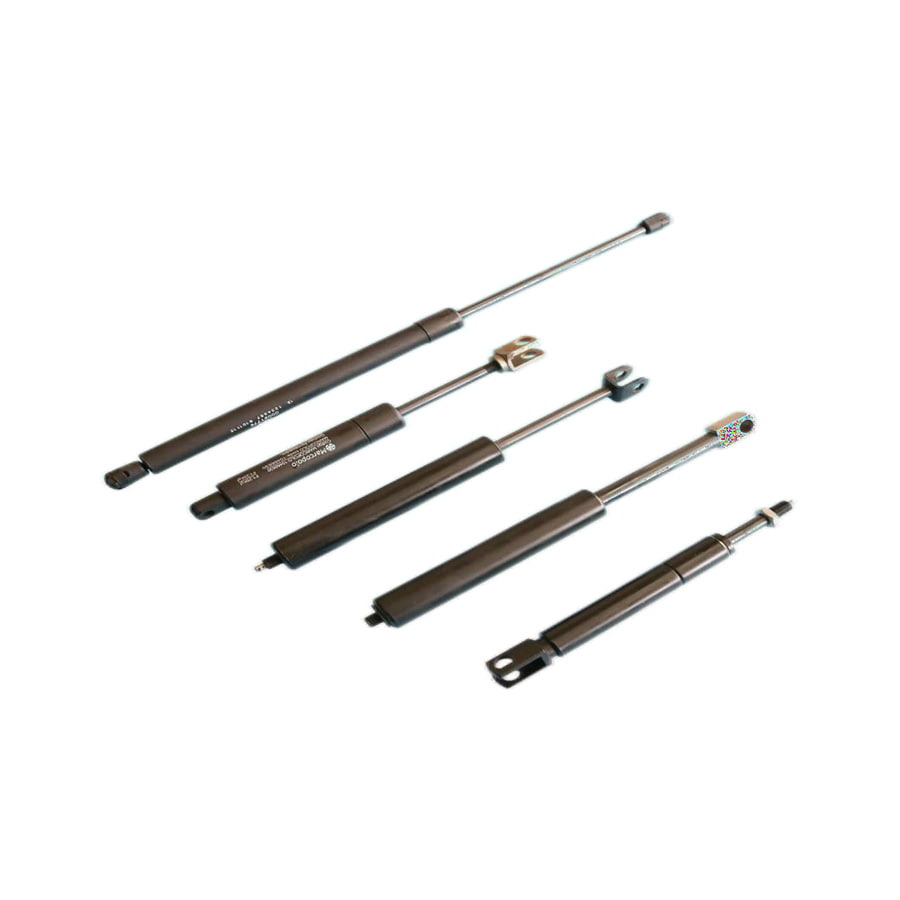
A furniture gas spring is a pressurized cylinder-based component that provides controlled, smooth motion for moving parts in furniture — lids, doors, flaps, and lift mechanisms. It works by storing compressed nitrogen gas inside a sealed cylinder, which pushes against a piston rod to generate a consistent outward force. When applied to a cabinet lid or a bed lift frame, this force supports the weight of the panel during opening, holds it in position once open, and controls the speed of closing so the panel doesn't slam shut under its own weight.
For furniture manufacturers and procurement teams, the gas spring is often treated as a minor hardware component — until a poor-quality unit fails in the field and triggers warranty claims or production line rework. Selecting the right furniture gas spring for a given application requires understanding the force rating, stroke length, mounting configuration, and end fitting type, all of which vary significantly between applications and suppliers. Getting these parameters right the first time saves substantial cost and time across a production run.
Not all furniture gas springs operate the same way. The classification of a gas spring determines how it behaves under load, whether it can be locked in position, and what type of movement it supports. Understanding the main functional types helps buyers specify the correct component from the outset rather than discovering a mismatch during prototype assembly.
The most common type used in furniture applications. A compression gas spring extends to its full length when unloaded and must be compressed to close. When applied to a cabinet lid or chest top, it pushes the lid open and holds it in the raised position. The extension force is constant throughout the stroke, which makes force calculation and application design straightforward. This type is widely used in ottoman storage boxes, chest freezer lids, piano-style cabinet tops, and blanket box furniture.
A lockable furniture gas spring can be fixed in any position along its stroke range using an external release mechanism — typically a push-button valve or a cable-operated trigger. This allows the connected panel or door to be held open at any angle rather than only at full extension. Lockable gas springs are commonly used in adjustable-angle furniture applications such as drafting tables, adjustable monitor arms integrated into desk furniture, and ergonomic workstation components where the user needs to set and hold a specific position.
Unlike a compression gas spring, a tension gas spring pulls its two mounting points together rather than pushing them apart. This makes it useful in furniture applications where the moving part needs to be pulled closed or held in a retracted position rather than pushed open. Tension gas springs are less common in standard furniture hardware but appear in specific applications such as pull-down shelving mechanisms and some recliner chair actuation systems.
A damper is a specialized gas spring designed primarily to control movement speed rather than provide a lifting or holding force. In furniture, dampers are frequently integrated into soft-close lid mechanisms, drawer systems, and folding table legs to prevent sudden or loud closing. They are often used in combination with a standard compression gas spring — one component provides the lift force while the damper controls the closing speed to produce a smooth, controlled motion throughout.
Ordering a furniture gas spring without fully specifying the required parameters is one of the most common sourcing mistakes in furniture hardware procurement. The following specifications define the performance of a gas spring and must all be confirmed before placing a production order.
| Specification | What It Means | Typical Range for Furniture |
| Extension Force (N) | The outward push force the gas spring generates | 50N – 800N depending on application |
| Stroke Length (mm) | The distance the piston rod travels from fully compressed to fully extended | 50mm – 500mm |
| Extended Length (mm) | Total length of the gas spring when fully extended | 150mm – 800mm |
| Cylinder Diameter (mm) | Outer diameter of the main cylinder body | 8mm – 28mm |
| End Fitting Type | The mounting bracket or ball socket at each end | Ball stud, eye bracket, clevis, threaded rod |
| Operating Temperature | Ambient temperature range within which performance is guaranteed | –20°C to +80°C for standard furniture use |
| Cycle Life | Number of open/close cycles before performance degradation | 20,000 – 50,000+ cycles for quality units |
Extension force is the specification buyers most often get wrong, particularly when designing lid support applications. The required force depends on the weight of the panel being supported, the angle of the gas spring relative to the hinge axis, and the distance of the mounting points from the pivot — all of which must be calculated together rather than estimated individually. Many furniture gas spring suppliers offer selection calculation tools or technical support to help buyers determine the correct force rating for a specific application geometry.
Different furniture applications place different demands on gas spring performance, and understanding these differences helps buyers shortlist the right product type and specification range from the outset rather than working through trial and error during prototype development.
This is the most common furniture gas spring application in residential furniture manufacturing. The gas spring must support the lid weight at full extension, hold it safely open while the user accesses the storage space, and control the closing speed so the lid doesn't slam. Force ratings typically fall between 80N and 200N depending on lid size and material. The mounting position is critical — incorrect placement of the ball stud or bracket relative to the hinge point produces either insufficient lift or a lid that requires excessive force to close.
Bed lift gas springs support the weight of a full mattress and bed frame during the lifting motion, which requires significantly higher force ratings than lid applications — typically 400N to 800N per spring, with two or more springs used per bed depending on the design. The stroke length must be matched precisely to the fold-down distance of the bed mechanism, and the end fittings need to be heavy-duty to handle the repeated loading cycles over the product's service life. This application has the least tolerance for specification error, as an undersized gas spring in a bed lift creates a genuine safety risk.
Wall-mounted cabinets with upward-opening flap doors — common in kitchen furniture, office storage units, and living room media cabinets — use gas springs to support the door weight during opening and prevent it from dropping suddenly when released. The compact space available inside a cabinet often limits cylinder diameter and extended length, making it important to identify these geometric constraints before specifying the gas spring. Some cabinet gas spring applications use two shorter units rather than one longer unit to fit within the available panel depth.
Upholstered furniture with adjustable back positions, headrests, or footrest mechanisms increasingly uses gas springs as an alternative to mechanical ratchet systems because they provide smoother, quieter adjustment and a more premium feel in operation. These applications often require lockable gas springs that allow the user to set and hold a specific angle. The durability requirement is high in this category, as recliner mechanisms may be cycled multiple times daily across the product's lifespan.
The furniture gas spring market includes a very wide range of quality levels, and the price difference between a reliable unit and a poorly manufactured one is not always immediately obvious from a cost-per-unit comparison. The following quality markers help buyers evaluate supplier products more effectively during the sourcing and sampling stage.
For furniture manufacturers sourcing gas springs as a production component rather than an end product, the supplier relationship and supply chain reliability matter as much as the component specification. Several practical considerations affect the sourcing decision beyond unit cost and technical specification.
Even a correctly specified furniture gas spring will underperform if installed in the wrong position or orientation. Several installation principles apply across most furniture applications and are worth communicating to assembly teams or incorporating into product design documentation.
Gas springs should generally be installed with the piston rod pointing downward in vertical applications, which keeps the internal oil in contact with the piston seal and ensures consistent damping performance throughout the service life. Installing a standard gas spring with the rod pointing upward causes the oil to pool away from the seal, which reduces damping effectiveness and can accelerate seal wear. Some gas springs are specifically designed for any-orientation mounting — confirm this with the supplier if your application requires the rod to point upward or horizontally.
Mounting point placement relative to the hinge or pivot axis is the most critical geometric factor in lid support applications. Mounting the gas spring too close to the hinge reduces the mechanical advantage and requires a higher force rating to support the same panel weight, while mounting too far from the hinge can cause the unit to bottom out before the lid reaches its intended open angle. Most furniture gas spring suppliers provide mounting position calculation guides or software tools — using these during the design stage rather than estimating positions during prototype assembly avoids the most common application geometry errors.
 Category

 English
 中文简体
中文简体 عربى
عربى Español
 +86-13861233850