 2026-07-21
 The high temperature thermostat stands as a critical yet often underappreciated component in systems ranging from automotive powertrains to industrial processing plants, aerospace thermal management, and advanced energy generation. Unlike ordinary thermostats that operate within mild ambient ranges, high temperature variants are specifically engineered to sense, control, and regulate temperatures that exceed the capabilities of conventional wax-pellet or bimetal designs. They must maintain accuracy, repeatability, and mechanical integrity under sustained thermal stress, often while exposed to aggressive fluids, high pressures, and vibration. This article explores the design principles, material selection, operational challenges, and evolving applications of high temperature thermostats, providing a comprehensive overview of this essential thermal control device.
Content
At its core, a thermostat is a temperature-sensitive switching or modulating device that responds to thermal expansion, phase change, or electronic sensing to actuate a valve, contact, or control signal. High temperature thermostats employ several distinct mechanisms, each suited to specific temperature ranges and environmental conditions.
The most common mechanical principle is the wax-pellet (or thermal expansion) actuator, widely used in automotive engine cooling. A sealed capsule contains a proprietary wax compound that expands significantly upon melting. As temperature rises, the expanding wax forces a piston outward, which moves a valve to regulate coolant flow. For high temperature applications, the wax formulation is tailored to have a melting point well above 100°C—typically in the 120–150°C range for heavy-duty diesel engines or industrial cooling loops. The capsule materials and piston seals must withstand both the elevated temperatures and the corrosive nature of the surrounding fluid.
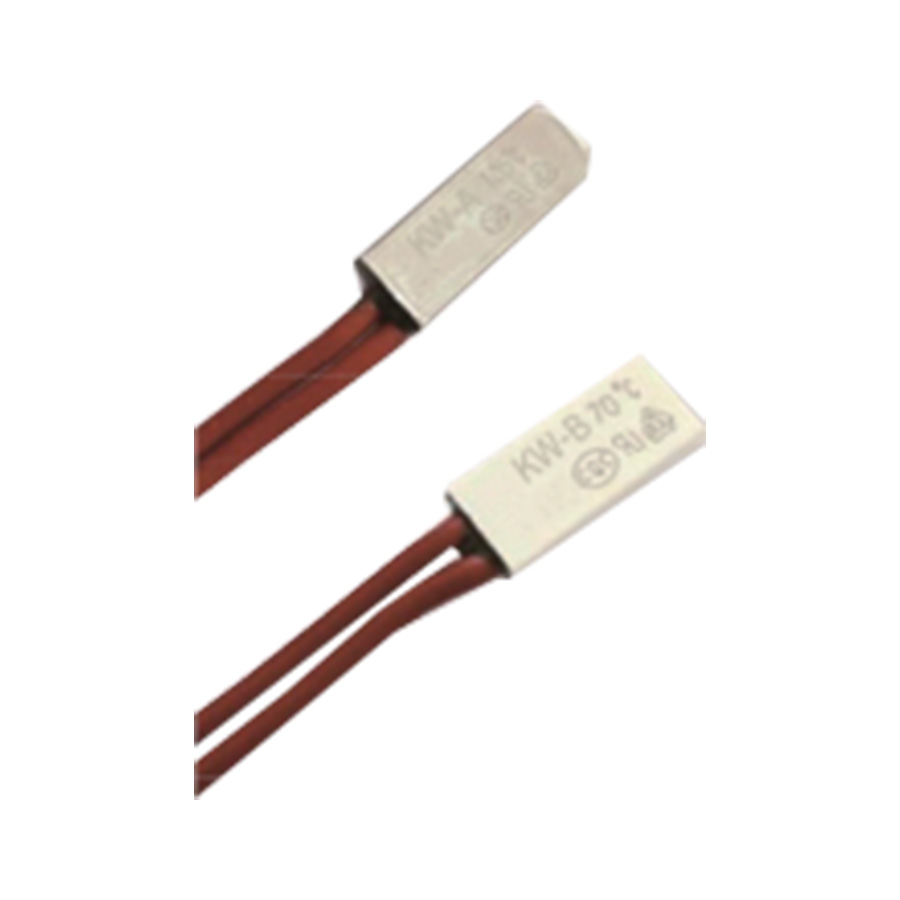
Another classical approach is the bimetal element, where two dissimilar metals with different coefficients of thermal expansion are bonded together. As temperature increases, the differential expansion causes the strip to curl, providing a mechanical displacement that can open or close contacts or adjust a valve. Bimetal thermostats are inherently simple, robust, and fail-safe, but their accuracy and hysteresis are limited compared to electronic alternatives. In high temperature versions, the metals are selected from refractory alloys or nickel-based superalloys to avoid creep and permanent deformation at extreme temperatures.
For the highest accuracy and fastest response, electronic thermostats utilise thermocouples, resistance temperature detectors (RTDs), or thermistors as sensing elements. The signal is processed by a microcontroller or analogue circuit that compares the measured temperature to a setpoint and drives an actuator—often a solenoid, stepping motor, or pulse-width-modulated heating element. Electronic high temperature thermostats are indispensable in laboratory furnaces, semiconductor processing, and chemical reactors, where precise temperature control is paramount.
The selection of materials for high temperature thermostats is a discipline in itself. Every component—from the sensing element to the housing, seals, and electrical terminations—must maintain its mechanical, electrical, and chemical properties across the entire operating range, which may extend from cryogenic to over 500°C in some industrial applications.
For mechanical thermostats with wax capsules, the capsule body is typically manufactured from brass, stainless steel, or nickel-plated copper, depending on the fluid compatibility. At sustained temperatures above 200°C, stainless steel grades such as 316L or duplex alloys are preferred to resist oxidation and stress corrosion cracking. The piston, which moves in and out of the capsule, is often hardened steel or ceramic-coated to minimise wear and galling. The elastomeric seals used to contain the wax pose a particular challenge, as conventional nitrile or EPDM rubbers degrade rapidly at high temperatures. Fluorosilicone, perfluoroelastomer (FFKM), or even metal bellows seals are employed in extreme cases.
Bimetal elements destined for high temperature operation are manufactured from Inconel, Monel, or other nickel-iron alloys that exhibit stable and predictable thermal expansion behaviour over a wide temperature span. The bonding interface between the two metal layers must be free of voids and intermetallic compounds that could induce fatigue cracking. Precision rolling and annealing processes ensure that the bimetal’s deflection-temperature characteristic remains linear and reversible after thousands of thermal cycles.
For electronic thermostats, the sensing probe must be sheathed in a robust, chemically inert material. Inconel 600, Hastelloy, or alumina ceramic tubes are common choices, depending on the corrosiveness of the media. The internal insulation of thermocouple wires must resist leakage and maintain high dielectric strength at temperature, often using magnesium oxide or aluminium oxide compacted around the wires. The electronic control unit itself is typically located remotely, connected via shielded cables to protect the sensitive semiconductor components from excessive heat.
High temperature thermostats are subjected to a unique set of stresses that do not trouble their lower-temperature counterparts. Thermal fatigue is a primary concern: repeated heating and cooling cycles induce expansion and contraction that can cause gradual deformation of the sensing element, loss of calibration, or fracture of solder joints. To mitigate this, designers specify materials with low coefficients of thermal expansion and ensure that all joints are flexible or have matched expansion coefficients.
Another critical factor is response time. In many applications—such as turbocharger cooling or engine oil temperature control—the thermostat must react within seconds to prevent overheating or undercooling. This requires a careful balance between the thermal mass of the sensing element (which must be low for fast response) and its mechanical strength (which demands sufficient section thickness). Designers often use thin-walled capsules, lightweight alloys, and minimal internal clearance to achieve the desired time constants.
Stability and drift over service life are equally important. High temperature exposure can cause the wax compound to degrade, bimetal to anneal, or thermocouple junction to change composition through diffusion. Manufacturers perform accelerated life testing, subjecting thermostats to millions of cycles at rated temperature while monitoring their opening and closing points. The best high temperature thermostats maintain their setpoint within a narrow band—often ±3°C or better—throughout their warranted life, which may span tens of thousands of operating hours.
Sealing integrity is another ongoing challenge. Thermostats in liquid systems must prevent leaks of pressurised, high-temperature coolant or oil. The seal between the moving piston and the capsule body must accommodate both thermal expansion and mechanical stroke without scoring or extrusion. Advanced designs utilise dynamic O-rings made of high-temperature polymers, supplemented by metal backup rings to prevent extrusion. For gaseous media, such as in steam or air systems, the seal design must also account for low viscosity and high diffusivity, requiring tighter clearances and labyrinth seals.
While engine cooling remains the most familiar application, high temperature thermostats in modern passenger and commercial vehicles have multiplied in number and complexity. The classic cooling system thermostat, which controls the flow of engine coolant to the radiator, now operates in conjunction with variable-speed electric water pumps and electronically controlled shutter grilles. High temperature versions, capable of withstanding coolant temperatures of 130°C or more, are essential for modern downsized turbocharged engines that run hotter to improve thermal efficiency and reduce emissions.
In addition to main coolant control, high temperature thermostats regulate oil cooling circuits, transmission fluid temperatures, and exhaust gas recirculation (EGR) cooler bypasses. EGR coolers, which reduce nitrogen oxide emissions by cooling recirculated exhaust gas before reintroduction to the intake, require thermostats that respond to exhaust temperatures that can exceed 800°C in the upstream section, though the control element is often located in the cooler outlet where temperatures are lower. Nevertheless, the thermostat’s sensing element may be exposed to aggressive condensates and soot, demanding materials with exceptional corrosion resistance.
Diesel particulate filter (DPF) regeneration systems also employ high temperature thermostats to monitor and control the temperature of the aftertreatment system. During active regeneration, fuel is injected into the exhaust stream to raise the DPF temperature to over 600°C. Thermostats used in this context are typically electronic, with sheathed thermocouples, and they form part of a closed-loop control strategy that adjusts fuel dosing and air management.
The industrial sector presents even more demanding requirements. In chemical reactors, high temperature thermostats maintain precise conditions for endothermic or exothermic reactions, often in corrosive and pressurised environments. Jacketed vessels and heat exchangers rely on thermostatic control valves to regulate the flow of heat transfer fluids such as thermal oil, molten salts, or Dowtherm, which operate at temperatures from 300°C to 400°C. The thermostats in these loops must not only withstand the temperature but also the chemical reactivity of the medium—for example, thermal oil can degrade and form acidic byproducts that attack standard materials.
In the power generation industry, high temperature thermostats are found in cooling water systems for gas turbines, in steam-attemperation systems, and in hydrogen-cooled alternators. They also play roles in renewable energy: concentrated solar power (CSP) plants use thermal storage systems with molten salts at temperatures exceeding 500°C. Thermostatic control valves in these systems are often pneumatically or electrically actuated, with high-temperature-rated positioners, and they must operate reliably despite thermal cycling and the abrasive nature of salt particulates.
Semiconductor manufacturing relies heavily on ultra-precise high temperature thermostats for wafer processing. Diffusion furnaces, chemical vapour deposition (CVD) reactors, and rapid thermal annealing (RTA) chambers demand temperature stability within fractions of a degree at temperatures up to 1200°C. These systems employ optical pyrometers or thermocouples with special calibration, and the control loops use PID algorithms with advanced feed-forward compensation to manage thermal inertia and variable loads.

Although HVAC systems typically operate at lower temperatures, certain specialised applications require high temperature thermostats. District heating networks, which distribute hot water or steam from central plants to multiple buildings, rely on thermostatic controls to regulate supply temperatures that can reach 150°C or more. Industrial boilers and large commercial water heaters also employ high temperature limit thermostats as safety devices, which are set to shut off fuel or power if the water temperature exceeds a safe threshold. These safety thermostats must have a manual reset feature and are often bimetallic snap-action types with gold-alloy contacts to prevent welding at high currents.
The evolution of high temperature thermostats is increasingly driven by digitalisation and connectivity. Smart thermostats—already common in residential heating—are now appearing in industrial contexts, where they communicate with supervisory control and data acquisition (SCADA) systems, provide predictive maintenance alerts, and log thermal histories for compliance purposes. These devices integrate temperature sensing with analytics algorithms that detect drift, wear, or blockages in the valve mechanism, enabling condition-based maintenance rather than scheduled replacement.
Wireless communication, powered by energy harvesting from the temperature gradient (thermoelectric generators), is being explored for remote locations where wiring is impractical. Additionally, the use of advanced ceramic sensors, such as silicon carbide or gallium nitride-based RTDs, promises to extend the upper temperature limits of electronic thermostats well beyond the current capabilities of metal-sheathed devices. These semiconductors exhibit excellent thermal stability and radiation hardness, making them candidates for aerospace and nuclear applications.
Another innovation is the development of adaptive thermostats that learn the thermal response characteristics of the system they control. By using model predictive control (MPC), these thermostats anticipate load changes—for instance, a sudden increase in engine load during mountain climbing—and preemptively adjust the valve position to prevent overshoot or undershoot. This approach improves energy efficiency and reduces thermal stress on system components.
Given the safety-critical nature of many high temperature thermostat applications, rigorous testing is non-negotiable. Manufacturers subject their products to a battery of standardised and custom tests, including thermal shock (rapid transitions between extreme temperatures), temperature cycling (slow ramping over thousands of cycles), vibration resistance (simulating engine or compressor operation), and over-temperature endurance (exposure to temperatures 10–20% above rated maximum to assess safety margins). Leak testing is performed using helium mass spectrometry for gaseous systems or pressure decay methods for liquid systems.
The calibration of each thermostat is verified using precise oil baths or dry-block calibrators, traceable to national standards. For production thermostats, automatic testing stations measure the opening and closing temperatures, hysteresis, and stroke, and reject any unit that falls outside the specified tolerances. The best manufacturers employ statistical process control to monitor batch-to-batch consistency of materials and assembly parameters, ensuring that the field performance meets or exceeds the design expectations.
In practice, high temperature thermostats do not last indefinitely. The wax compound in mechanical thermostats can migrate or decompose over time, altering the setpoint. Bimetal elements can develop residual stresses that shift the response curve. Electronic sensors can drift due to contamination or oxidation of the sensing junction. Therefore, periodic verification and recalibration are recommended in critical applications, especially where safety or process quality depends on tight temperature control.
Replacement intervals are typically specified by the original equipment manufacturer based on operating hours, cycles, or environmental severity. In automotive applications, many manufacturers recommend replacing the coolant thermostat every 80,000–100,000 kilometres as a preventive measure, although a properly functioning high temperature thermostat may last much longer. In industrial settings, maintenance schedules are often aligned with plant shutdowns, and thermostats are checked against a reference thermometer using test rigs.
The trajectory of high temperature thermostat development points toward even higher operating temperatures, greater precision, and enhanced intelligence. As internal combustion engines continue to push thermal efficiency limits, coolant temperatures may approach 150°C, requiring new wax formulations and seal materials. Electric vehicles, while eliminating engine coolant thermostats in the traditional sense, still require thermal management of battery packs and power electronics, with some high-performance EVs employing oil-based cooling loops that run hot—again necessitating advanced thermostatic controls.
In the industrial sphere, the push for decarbonisation and electrification will increase the role of high temperature heat pumps, thermal storage systems, and waste-heat recovery units, all of which rely on robust thermostat technology. Additive manufacturing (3D printing) is beginning to enable bespoke thermostat geometries—such as integrated flow passages and custom mounting flanges—that reduce assembly complexity and improve thermal response.
The high temperature thermostat, though a humble component compared to the systems it serves, embodies the intersection of material science, mechanical design, and control theory. Its evolution is a microcosm of broader engineering progress, reflecting society’s unending demand for safer, cleaner, and more efficient thermal processes. Whether in the engine bay of a European luxury sedan, the steam lines of a chemical plant, or the reactor core of a solar tower, the high temperature thermostat will continue to perform its essential duty: ensuring that heat is neither too little nor too much, but just right for the task at hand.
 Category

 English
 中文简体
中文简体 عربى
عربى Español
 +86-13861233850