 2026-04-03
 Content
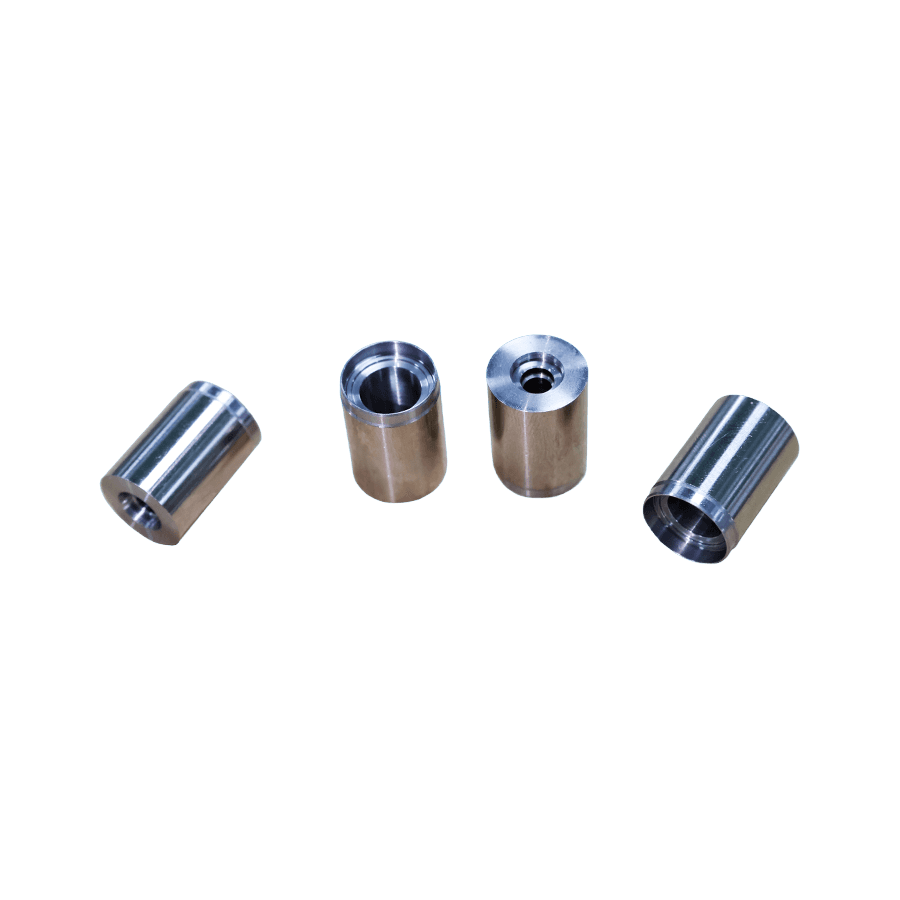
Precision tube fittings are engineered components used to connect, terminate, or control the flow of fluids and gases through tubing systems with extremely tight dimensional tolerances. Unlike standard pipe fittings, precision tubing connectors are manufactured to exacting specifications — covering wall thickness, thread pitch, sealing surface finish, and material composition — to ensure leak-free, reliable performance even under demanding conditions such as high pressure, high temperature, or corrosive media exposure.
The importance of precision in these components cannot be overstated. A fitting that is even slightly out of tolerance can cause micro-leaks, pressure drops, vibration-induced fatigue failures, or contamination in sensitive systems. Industries like semiconductor manufacturing, aerospace, medical devices, and analytical instrumentation depend on high precision pipe fittings where failure is not an option. In these contexts, precision is not just a quality feature — it is a fundamental safety and performance requirement.
Precision tube fittings come in a wide variety of configurations, each suited to specific connection needs, tube materials, and system requirements. Understanding the differences helps engineers select the right fitting the first time and avoid costly rework or system failures.
Compression fittings are among the most widely used precision tubing connectors. They work by compressing a ferrule — a small ring, typically made of stainless steel or brass — against the outer surface of the tube as the nut is tightened. This creates a metal-to-metal seal that is highly reliable and repeatable. Single-ferrule and dual-ferrule (two-piece) designs are both available; dual-ferrule systems offer superior grip and vibration resistance, making them preferred in high-pressure instrumentation lines and hydraulic systems.
Flare fittings require the tube end to be flared — typically at a 37° or 45° angle — before assembly. The flared tube end seats against a matching cone in the fitting body, and the nut drives the tube into the seat to form a pressure-tight seal. These fittings are common in hydraulic systems, refrigeration lines, and fuel systems where high-pressure capability and vibration resistance are essential. The 37° JIC (Joint Industry Council) flare is a widely recognized standard in hydraulic applications.
Push-to-connect fittings, also called push-in or instant fittings, allow tubing to be connected simply by inserting it into the fitting body until it clicks into place. An internal collet with gripping teeth locks the tube in position while an O-ring provides the seal. These are popular in pneumatic systems, low-pressure fluid circuits, and laboratory environments where quick installation and easy disassembly are priorities. High-precision versions of push-to-connect fittings are manufactured with tighter tolerances to ensure consistent seal performance across high-cycle applications.
Face seal fittings, commonly known as ORFS (O-Ring Face Seal) fittings, use an O-ring seated in a machined groove on the face of the fitting to create the seal. When the nut is tightened, the O-ring is compressed between the two flat mating surfaces. This design provides excellent leak-free performance even under pressure spikes and vibration, making ORFS fittings a preferred choice for mobile hydraulics, high-pressure test systems, and applications where zero leakage tolerance is required.
Bite-type fittings, common in European industrial standards (DIN 2353), use a cutting ring that bites into the outer surface of the tube wall when the fitting is assembled. This creates a strong mechanical grip and a pressure-tight seal without any pre-flaring of the tube. They are widely used in hydraulic machinery, fluid power systems, and instrumentation lines where easy field assembly and high reliability are valued.
The material of a precision tube fitting determines its pressure rating, corrosion resistance, temperature range, and compatibility with specific media. Selecting the wrong material is one of the most common — and costly — mistakes in system design.
| Material | Key Properties | Typical Applications |
| 316 Stainless Steel | High corrosion resistance, strong, temperature tolerant | Chemical processing, offshore, semiconductor |
| 304 Stainless Steel | Good corrosion resistance, cost-effective | General instrumentation, food processing |
| Brass | Easy to machine, good conductivity, moderate corrosion resistance | Pneumatics, water systems, HVAC |
| Hastelloy C-276 | Excellent resistance to aggressive acids and chlorides | Chemical plants, pulp and paper, marine |
| Monel 400 | Seawater resistant, high strength, non-magnetic | Marine, offshore oil and gas, defense |
| PVDF / PEEK (Plastic) | Chemically inert, lightweight, non-metallic | Ultra-pure semiconductor, lab analysis, biomedical |
For most industrial applications, 316 stainless steel is the default choice due to its broad chemical compatibility and mechanical strength. However, when dealing with highly aggressive media — such as hydrochloric acid, chlorine compounds, or high-salinity environments — upgrading to Hastelloy or Monel alloys is often necessary to prevent premature fitting failure.
Precision tube fittings serve a broad range of industries, but their role is especially critical in sectors where system integrity, cleanliness, and performance consistency are non-negotiable. Here is how different industries depend on these components:
In semiconductor fabrication plants (fabs), ultra-high-purity gas and chemical delivery systems require fittings with electropolished internal surfaces, particle-free assembly, and absolute leak integrity. Even trace contamination from a poorly sealed fitting can ruin an entire wafer batch worth millions of dollars. PVDF and electropolished 316L stainless steel fittings with face seal designs are standard in these environments.
Aircraft hydraulic systems, fuel lines, and pneumatic controls operate under extreme pressure ranges and must perform reliably through wide temperature swings and constant vibration. Precision hydraulic fittings used in aerospace must meet strict standards such as AS4395 (formerly MIL-F-18866) and MS (Military Standard) specifications. Weight is also a factor, leading to the use of titanium and high-strength aluminum fittings in some applications.
Upstream, midstream, and downstream oil and gas operations expose fittings to high-pressure hydrocarbons, H₂S-containing sour gas, high temperatures, and saltwater environments. Precision tube fittings in this sector must comply with NACE MR0175 standards for sour service and are often made from duplex stainless steel or corrosion-resistant alloys. Instrumentation tubing on wellheads, flow meters, and control panels relies heavily on high-integrity compression and face seal fittings.
Bioprocessing equipment, sterile fluid transfer systems, and analytical instruments in the medical and pharmaceutical sector require fittings that are not only leak-free but also fully sterilizable and compliant with FDA or USP Class VI material standards. Surface finish (Ra values) is a critical specification here, as rough internal surfaces can harbor bacteria or particulate contamination. Sanitary tube fittings and ultra-clean precision connectors are purpose-built for these demands.
Gas chromatographs, mass spectrometers, high-performance liquid chromatography (HPLC) systems, and process analyzers all require precision tubing connectors that can maintain tight seals at very low flow rates and handle high-purity carrier gases or solvents. Micro-fitting systems with sub-millimeter tube diameters and extremely low dead volume are common in this field.
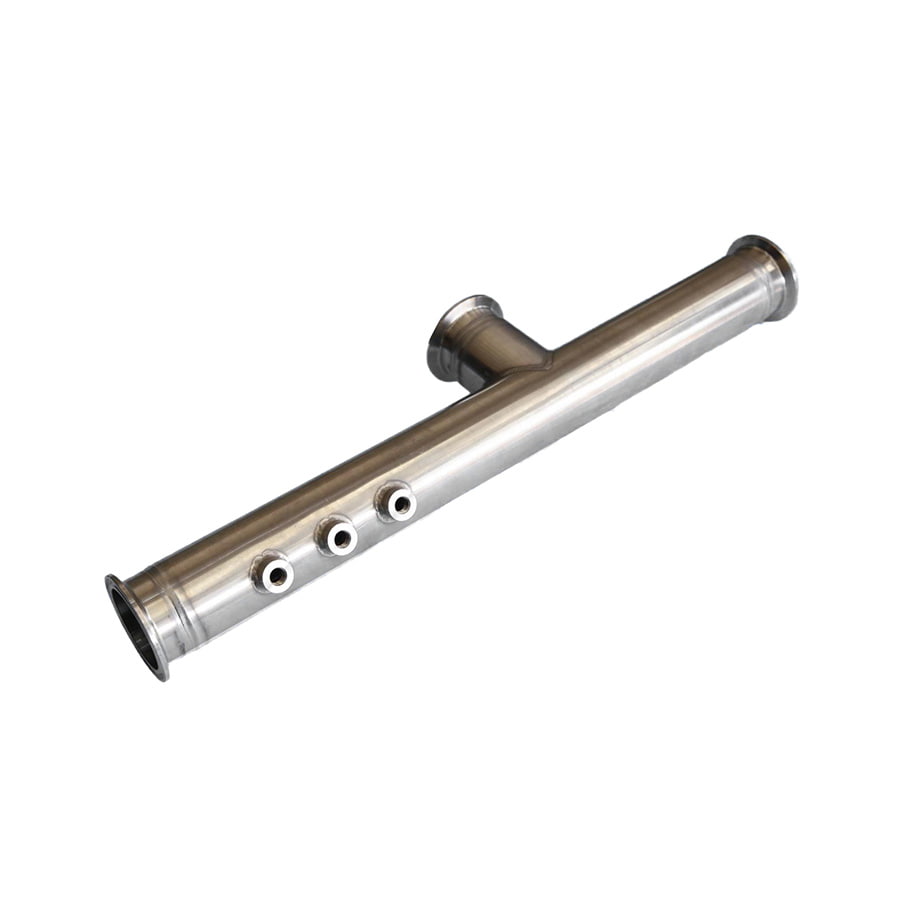
Choosing the correct precision tube fitting involves evaluating several interdependent parameters. Getting this right at the design stage prevents leaks, system downtime, and expensive replacements later.
Even the highest-quality precision hydraulic fittings will leak or fail prematurely if they are installed incorrectly. Proper installation technique is just as important as correct product selection.
Before assembly, the tube end must be cut squarely using a proper tube cutter — not a hacksaw, which leaves burrs and irregular cuts. After cutting, deburr both the inner and outer tube edges thoroughly. Even small burrs can prevent a ferrule from seating correctly and create leak paths. For stainless steel tubing, a dedicated deburring tool or reamer should be used, as the material work-hardens quickly and resists standard deburring methods.
Most compression fitting manufacturers specify assembly in terms of "turns past finger-tight" (TPFT) rather than a torque value. For example, a standard Swagelok-style dual-ferrule fitting is typically assembled by tightening finger-tight first, then advancing the nut exactly 1.25 turns with a wrench. Over-tightening does not improve the seal — it deforms the ferrule excessively and can actually weaken the connection or crack the fitting body. Under-tightening leaves the ferrule unseated and causes leaks. Always follow the specific manufacturer's assembly instructions.
For tapered NPT threads, apply PTFE tape or anaerobic thread sealant to the male threads before assembly. Do not apply sealant to the first one or two threads to avoid contaminating the fluid system. For parallel thread fittings (BSPP, metric), sealing relies on the O-ring or bonded seal washer at the face — do not use thread sealant on these, as it will interfere with the proper seating of the face seal.
After installation, always perform a system leak test before putting the system into service. For gas systems, pressurize with an inert gas such as nitrogen and apply a leak detection solution (or use a calibrated leak detector for critical applications). For hydraulic or liquid systems, conduct a hydrostatic pressure test at 1.5× the working pressure and hold for a defined period while inspecting all fitting connections. Never use oxygen or flammable gases for pressure testing.
Precision tube fittings for critical applications must conform to recognized industry standards. These standards define dimensional interchangeability, pressure ratings, material requirements, and testing procedures. Knowing which standards apply to your industry protects you from selecting non-compliant components and helps streamline procurement and quality documentation.
Even experienced engineers and technicians can fall into recurring traps when specifying or installing precision tubing connectors. Avoiding these mistakes saves significant time, money, and safety risk.
| Mistake | Why It's a Problem | How to Avoid It |
| Mixing inch and metric tubes | Creates improper ferrule seating and leaks | Confirm tube OD standard before ordering fittings |
| Reusing single-use ferrules | Deformed ferrule won't re-seal reliably | Replace ferrules on every reassembly unless rated for reuse |
| Ignoring temperature derating | Exceeds fitting pressure rating at elevated temperatures | Check pressure-temperature (P-T) rating charts for your operating conditions |
| Using NPT fittings in high-vibration lines | Tapered threads loosen under cyclic loading | Use face seal or flare fittings in vibration-prone locations |
| Cross-threading during assembly | Damages threads and causes immediate or delayed leaks | Always start threads by hand and confirm smooth engagement before using a wrench |
| Selecting fittings by price alone | Low-cost fittings may have poor tolerances and fail prematurely | Qualify suppliers with material certs and dimensional inspection reports |
The precision tube fitting industry is not static. Advances in manufacturing technology, evolving application demands, and sustainability pressures are all driving meaningful innovation in how these components are designed and produced.
Additive manufacturing (3D printing) in metal is beginning to influence custom fitting production, particularly for complex geometries or low-volume aerospace and defense applications. While not yet mainstream for high-volume precision fittings, 3D-printed titanium and Inconel fittings are already being tested in specialized programs where conventional machining is too costly or geometrically constrained.
Surface treatment technologies are advancing rapidly, with new electropolishing processes, passivation techniques, and DLC (diamond-like carbon) coatings extending the service life and chemical compatibility of stainless steel and alloy fittings in aggressive environments. For ultra-high-purity applications, these surface treatments reduce metal ion leaching and particle generation to levels previously unachievable.
Miniaturization is another clear trend, particularly in analytical instrumentation and medical devices. Micro tube fittings for tubing with ODs as small as 1/16 inch or 1.6 mm are increasingly demanded as equipment designers push for more compact systems without sacrificing pressure integrity or flow performance. Manufacturers are investing in advanced CNC micro-machining capabilities and metrology equipment to meet these tightening dimensional requirements.
Finally, digital traceability is becoming a procurement requirement in regulated industries. Smart labeling, QR-code-linked material certifications, and blockchain-based supply chain documentation are making it easier for end users to verify the authenticity and compliance of every fitting in a critical system — reducing the risk of counterfeit components entering safety-critical fluid circuits.
 Category

 English
 中文简体
中文简体 عربى
عربى Español
 +86-13861233850