 2026-03-24
 Content
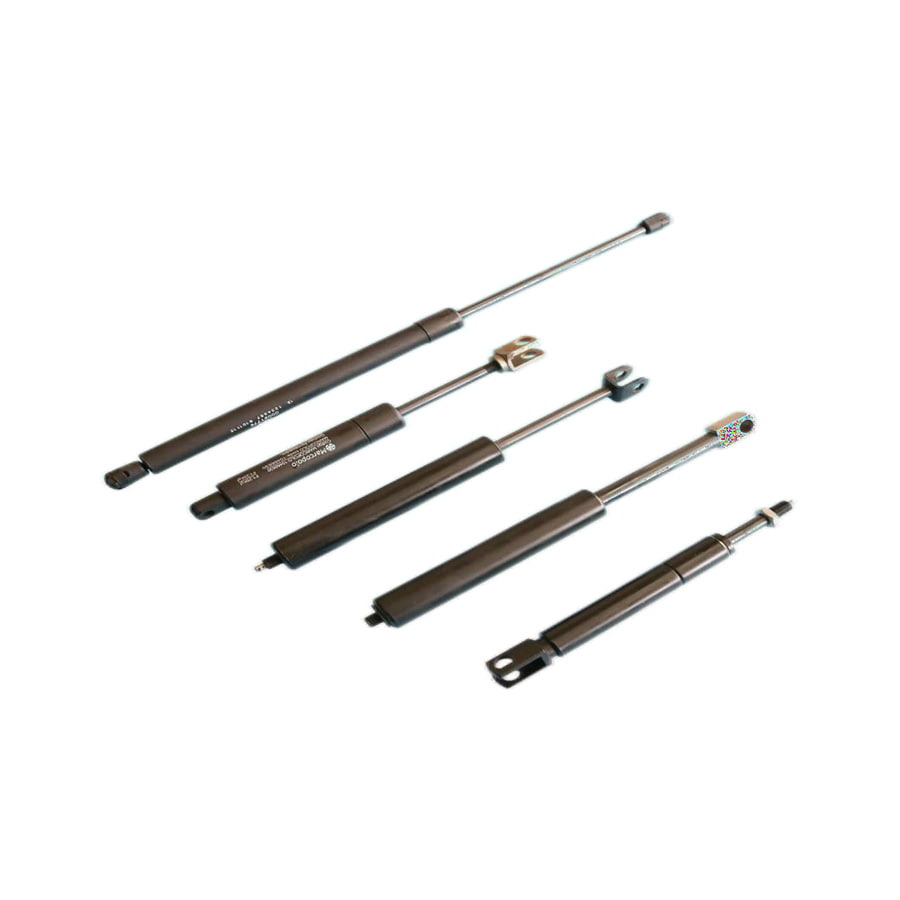
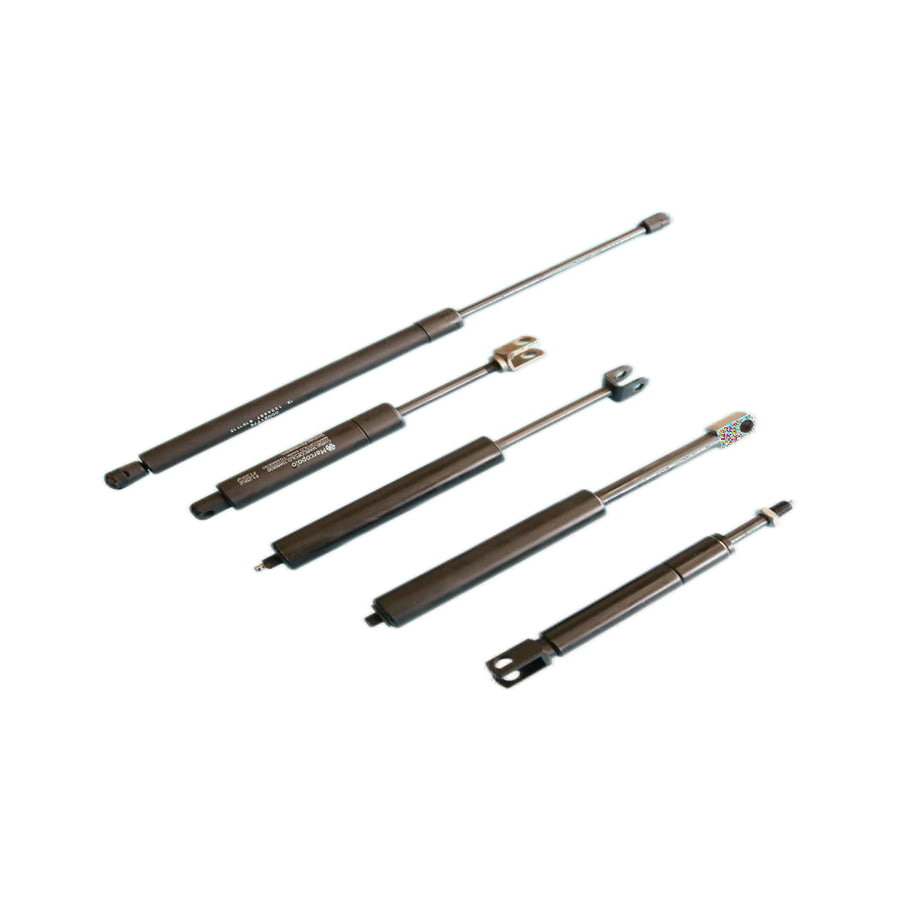
A heavy-duty gas spring is a type of pneumatic actuator that uses compressed nitrogen gas inside a sealed cylinder to provide controlled force, cushioning, and motion assistance. Unlike standard gas springs designed for light loads, heavy-duty versions are built to handle significantly higher forces — often ranging from 500N to over 50,000N — making them essential in demanding industrial, automotive, and commercial applications.
At their core, all gas springs work on the same principle: pressurized gas pushes against a piston rod to generate an extending or compressing force. What sets heavy-duty industrial gas springs apart is the quality of materials used, the thickness of the cylinder walls, the precision of the sealing system, and the engineering tolerances required to maintain performance under extreme loads, temperatures, and cycle counts.
Heavy-duty gas struts and springs show up in a surprisingly wide range of industries. Their ability to provide smooth, controlled force in a compact form factor makes them ideal wherever heavy components need to be lifted, lowered, held in position, or damped safely.
In factory environments, heavy-duty compression gas springs are used in press tooling, die-cutting machines, and stamping equipment. They absorb shock loads, return tooling components to their resting position, and reduce operator fatigue. High-cycle gas springs in these settings may need to withstand millions of actuations without failure.
Truck hoods, bus doors, heavy equipment cab covers, and cargo hatches all rely on heavy-duty lift gas springs. These applications demand springs that can operate reliably across wide temperature ranges — from freezing winters to scorching summers — while supporting loads that would overwhelm standard gas struts.
Aircraft access panels, weapons bay doors, and ground support equipment require aerospace-grade heavy-duty gas springs that meet strict safety and certification standards. Corrosion resistance, precise force output, and reliability under vibration are non-negotiable in these environments.
Surgical tables, patient lifts, and imaging equipment use heavy-duty locking gas springs that can hold a position securely under load. In medical settings, the emphasis is on smooth, quiet operation alongside the structural strength to support patient weight safely.
Selecting the right heavy-duty gas spring requires more than just matching the weight of the load. Several technical parameters interact to determine whether a spring will perform correctly and last as long as expected.
| Parameter | What It Means | Why It Matters |
| Extension Force (F1) | Force exerted when the rod is fully extended | Determines lifting capacity |
| Compression Force (F2) | Force when rod is fully compressed | Usually 20–30% higher than F1 due to gas compression |
| Stroke Length | Distance the rod travels | Must match the range of motion required |
| Extended / Compressed Length | Overall dimensions in each state | Critical for fitting within the application space |
| Operating Temperature | Temperature range for reliable function | Gas pressure changes with temperature — must be rated correctly |
| Cycle Life | Number of actuations before failure | Industrial models often rated for 100,000+ cycles |
| Rod Diameter | Thickness of the piston rod | Thicker rods resist buckling under side loads |
Not all heavy-duty gas springs work the same way. Different application needs have led to several distinct designs, each with specific advantages.
These are the most common type. The rod extends outward under gas pressure and must be compressed by an external force. They are used to push, lift, or hold components open. Most heavy-duty lift supports for hatches and access panels fall into this category.
Heavy-duty locking gas springs include an internal valve mechanism that locks the rod in any position when external force is released. This is critical in medical tables, adjustable workstations, and any application where the load must be held securely at a specific height or angle without drifting.
In this design, the spring exerts force when compressed rather than when extended. Heavy-duty compression gas springs are common in die stamping and clamping fixtures where the spring needs to push back against a pressing force.
Some heavy-duty models allow the internal gas pressure — and therefore the output force — to be adjusted in the field using a special valve and charging tool. This flexibility is valuable when load requirements change over time or when fine-tuning is needed during installation.
For harsh environments involving saltwater, chemicals, or high humidity, stainless steel heavy-duty gas springs provide the structural strength of standard models with far superior corrosion resistance. Marine, food processing, and offshore industries frequently specify these variants.
Getting the force calculation right is the most important step in selecting a heavy-duty gas spring. Using a spring that is too weak will result in poor performance or dangerous loads; one that is too strong will make the component difficult or unsafe to close.
For a simple lid or hatch application, the basic calculation involves the following factors:
Most gas spring manufacturers provide online calculators or engineering support for this process. For complex machinery applications with non-linear motion, side loads, or dynamic forces, it is strongly recommended to work directly with the manufacturer's engineering team rather than relying solely on simplified formulas.
Even the best heavy-duty industrial gas spring will underperform or fail prematurely if installed incorrectly. The following practices will significantly extend service life and ensure safe operation.
Gas springs do not last forever, and in heavy-duty applications, a failing spring can create a serious safety hazard. Watch for these warning signs:
In high-cycle industrial environments, it is common practice to replace gas springs as part of a scheduled preventive maintenance program rather than waiting for failure, particularly when the consequences of a failed spring include equipment damage or worker injury.
The market for heavy-duty gas springs ranges from premium manufacturers with full engineering support to low-cost suppliers offering generic catalog items. For critical applications, the difference in quality between these tiers is substantial. When evaluating suppliers, consider the following:
Well-established manufacturers such as Stabilus, Bansbach, ACE Controls, and Dictator are widely recognized in the industrial heavy-duty gas spring market, though many strong regional manufacturers also produce excellent products at competitive prices.
 Category

 English
 中文简体
中文简体 عربى
عربى Español
 +86-13861233850