 2026-03-09
 Content
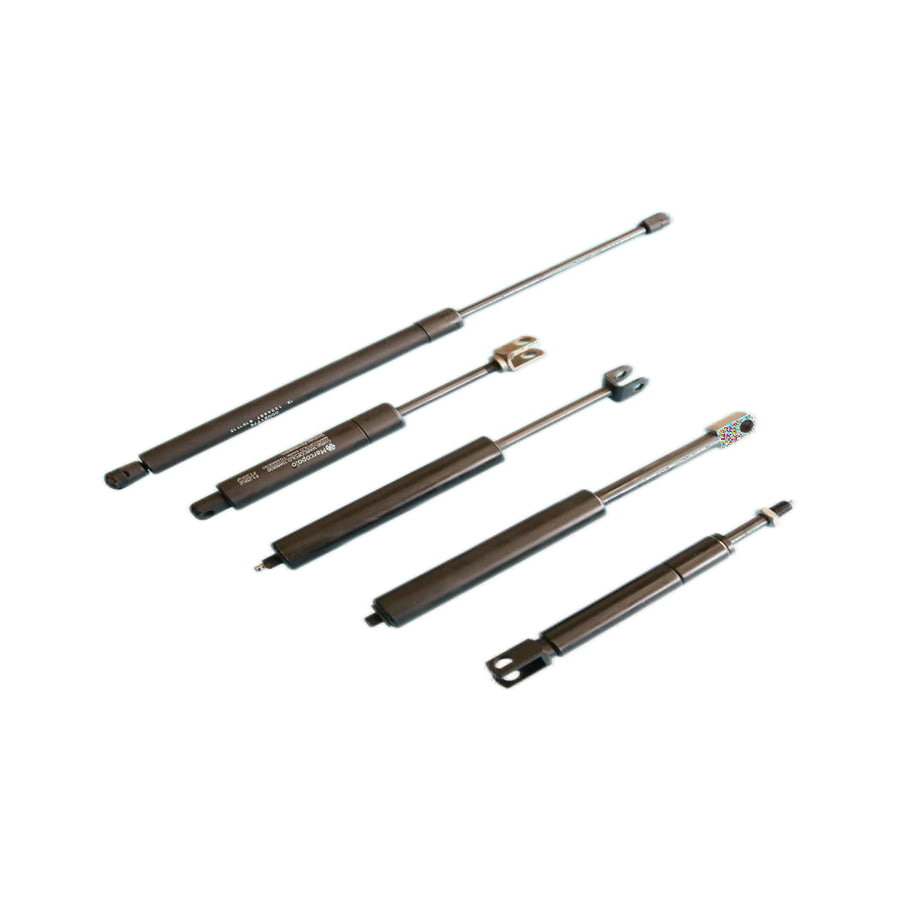
Gas springs are precision components relied upon in everything from automotive tailgates and office chairs to medical equipment and industrial machinery. Their core specification — the force they exert, measured in Newtons — determines whether they will hold a lid open, lower a seat gently, or support a heavy hatch without slamming. When a gas spring fails, becomes sluggish, or needs replacing, one of the first questions technicians and DIY users face is: what Newton rating does the replacement need to be? Without access to a force gauge or a calibrated test rig, measuring gas springs force accurately can seem impossible. In practice, however, several reliable field methods allow you to determine or closely estimate the Newton rating using tools you almost certainly already have.
Before attempting any measurement, it helps to understand what the Newton rating of gas springs represents. Gas springs work by sealing compressed nitrogen gas inside a cylinder. As the piston rod is pushed inward, the gas compresses further and resists with increasing force. The stated Newton rating — often stamped on the cylinder body or printed on a label — refers to the extension force: the force the gas spring exerts when trying to push its rod outward to the fully extended position.
This force is not perfectly constant throughout the stroke. Gas springs typically produce slightly more force at full compression than at full extension. The ratio between these two values is called the k-factor or compression ratio, and for standard gas springs it usually falls between 1.2 and 1.4. This means a gas spring rated at 500 N may actually push with around 600–700 N when fully compressed. Keeping this in mind prevents measurement errors when you are testing at mid-stroke or near the compressed position.
A standard bathroom scale is one of the most accessible tools for estimating the force of gas springs at home or in a workshop. Most modern scales display weight in kilograms, which can be converted directly to Newtons using the relationship: 1 kg ≈ 9.81 N (commonly rounded to 10 N for field estimates).
To perform this measurement, follow these steps carefully to get a consistent and repeatable reading:
For example, if the scale reads 45 kg while the gas spring is mid-stroke, the approximate force is 45 × 9.81 = 441 N, suggesting this is a gas spring in the 400–500 N class. This method is accurate within roughly 5–10%, which is sufficient for most replacement decisions.
If you want to measure the true extension force of gas springs rather than compression resistance, a hanging weight method offers a practical alternative. This approach tests how much load is needed to hold the rod in the retracted position against the spring's outward push.
Mount the gas spring horizontally with its body clamped firmly in a vice or bolted to a bracket. Attach a cord to the rod end and run it over a smooth pulley or around a dowel acting as a low-friction redirect. Hang calibrated weights — bags of sugar, water containers, or known-weight dumbbells — from the free end of the cord. Add weight gradually until the rod holds position without moving. The total hanging weight at equilibrium, converted to Newtons, approximates the extension force of your gas springs at that stroke position. Repeat at several rod extension lengths to map the force curve across the stroke.
When gas springs are still installed in their original application — a car boot lid, a cabinet door, a machine cover — you can reverse-engineer the Newton rating by analysing the geometry and the weight being supported. This method requires no direct measurement of the spring itself and can be surprisingly accurate when performed carefully.
The basic principle relies on moment balance. The gas spring force multiplied by its effective lever arm must equal the weight of the panel multiplied by its own lever arm from the hinge. The key measurements you need are:
Using these values, the required gas spring force = (Panel weight in N × Panel CG distance) ÷ Gas spring lever arm distance. This tells you the theoretical force the gas springs must provide for the panel to be in equilibrium. If the lid holds open without additional support, the installed gas springs are at or above this calculated value.
Before resorting to physical measurement, always inspect the gas spring body carefully. Most manufacturers stamp or label Newton ratings directly on the cylinder. Common label formats include a number followed by "N" (e.g., 300N, 500N, 800N), or a part number that encodes the force rating within it. The table below shows common label conventions used by major gas springs manufacturers:
| Label Format | Example | Meaning |
| Direct Newton marking | 500N | 500 Newton extension force |
| Part number embedded | GS-0500-250 | 500 N force, 250 mm stroke |
| Kilogram-force (kgf) | 51 kgf | ~500 N (multiply kgf × 9.81) |
| Colour-coded end cap | Red cap | Force range per manufacturer code |
If the label is worn or missing, search the part number stamped on the body against the manufacturer's online catalogue. Most major gas springs suppliers publish full dimensional and force data for their product ranges, making identification straightforward when a partial part number is still legible.
Whether you are using scales, hanging weights, or geometric calculation, a few practical habits will improve the accuracy of your gas springs force estimates significantly:
For most replacement and maintenance scenarios, field estimation methods for gas springs force are entirely adequate. Replacing a worn boot lid gas spring, sourcing a substitute for a broken cabinet strut, or verifying that a used gas spring still has usable force remaining — these tasks do not require laboratory precision. A bathroom scale estimate within 10% is more than sufficient to select the correct replacement from a standard range of gas springs Newton ratings, which are typically available in increments of 50 N or 100 N.
However, for safety-critical applications — such as medical equipment covers, heavy industrial access panels, or aerospace components — field estimation is not sufficient. In these cases, the gas springs must be tested on a calibrated force gauge or a certified test rig, and the results documented. When in doubt about the safety implications of your application, consult the gas springs manufacturer directly and request certified test data for the specific units you are using. The methods described in this article are powerful tools for everyday maintenance and replacement work, but they have limits that professional testing environments are designed to overcome.
 Category

 English
 中文简体
中文简体 عربى
عربى Español
 +86-13861233850