 2026-05-19
 Content
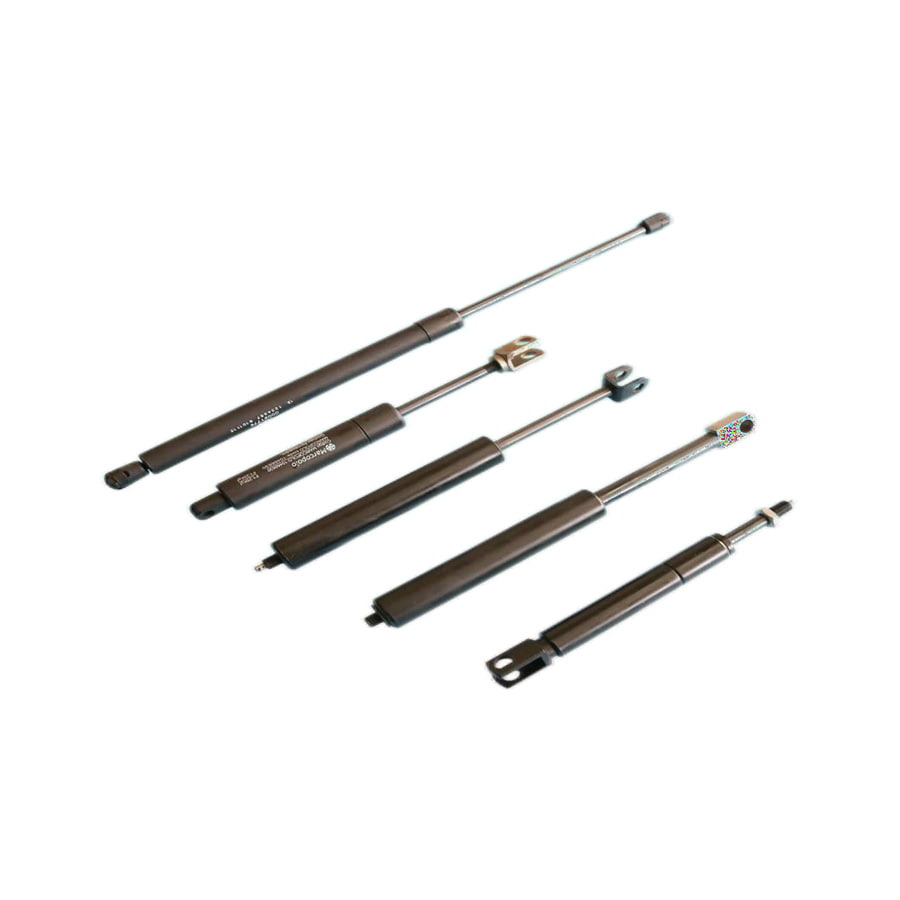
A hydraulic gas spring — also commonly referred to as a gas strut, gas lift, or gas-filled spring — is a mechanical device that uses compressed gas, typically nitrogen, sealed inside a cylinder to exert a controlled pushing or damping force. Unlike a traditional coil spring that stores and releases energy through metal tension, a hydraulic gas spring relies on the compressibility of gas and, in some designs, the resistance of oil to deliver smooth, predictable, and adjustable motion control.
The basic construction of a hydraulic gas spring consists of a steel or stainless steel cylinder, a piston rod that slides in and out of the cylinder, a piston head fitted with seals, and a pressurized gas chamber. When an external load pushes the rod inward, the gas inside compresses and stores energy. When the load is removed, the compressed gas expands and pushes the rod back out, creating the lifting or extending force the device is known for. In hydraulic-damped versions, a precise amount of oil is also present in the cylinder; as the piston moves, oil is forced through small channels or orifices, slowing the motion down in a controlled, cushioned way.
This combination of gas pressure for force and oil restriction for damping is what distinguishes a true hydraulic gas spring from a simple gas strut. The result is a component that doesn't just push — it also controls the speed of movement, which is critical in applications where an abrupt or uncontrolled motion could damage equipment or injure users.
These two terms are often used interchangeably, but they describe slightly different things. A standard gas spring primarily provides an extension force — it pushes the rod outward and holds a load in an open or raised position. A hydraulic damper, by contrast, is focused on controlling the speed of movement rather than providing a lifting force. A hydraulic gas spring combines both functions in a single unit.
In practice, the distinction matters when selecting the right component. If you need something to hold a heavy lid open, a standard gas spring may be sufficient. But if that lid needs to close slowly and quietly — like a soft-close cabinet door or a hospital equipment hatch — you need the damping behavior of a hydraulic gas spring. The oil inside the cylinder creates viscous resistance that slows the motion at a predictable, tunable rate, regardless of how hard you push.
Hydraulic gas springs are manufactured in several configurations to suit different force requirements, mounting styles, and motion profiles. Understanding the main types helps you match the right product to the right application.
The most common type. The rod is pushed inward against the gas pressure when a load is applied, and the spring extends back out when released. These are used in the vast majority of everyday applications — from car trunk lids to office chair height adjustment mechanisms and furniture lift systems.
Also called traction gas springs, these work in the opposite direction — the rod is pulled outward and the spring exerts a retracting force, pulling back to a compressed state. They are used in applications where a pulling motion is needed, such as certain industrial machinery guards or door closing mechanisms.
These feature a locking valve that can be triggered manually, usually via a push button or lever at the end fitting. When the valve is released, the spring moves freely; when locked, it holds its position rigidly at any point in the stroke. These are widely used in adjustable office chairs, medical examination tables, and sit-stand desks.
Some hydraulic gas springs are designed with a refillable valve that allows the internal pressure — and therefore the output force — to be adjusted after installation. This is useful in applications where loads vary or where fine-tuning is required on-site without replacing the entire unit.
Hydraulic gas springs appear in a remarkably wide range of industries and products. Their ability to provide controlled, smooth motion in a compact form factor makes them a preferred solution wherever lifting, lowering, or damping is required.
| Industry / Application | Typical Use | Key Benefit |
| Automotive | Trunk lids, hoods, tailgates, convertible roofs | Hands-free opening, controlled close |
| Furniture | Lift-top coffee tables, Murphy beds, cabinet doors | Soft-close, counterbalanced lifting |
| Medical Equipment | Examination tables, surgical lights, hospital beds | Precise positioning, lockable at any angle |
| Industrial Machinery | Machine guards, access hatches, press covers | Safe, damped opening under load |
| Aerospace | Cargo doors, seat adjustment, storage compartments | Reliable performance across temperature extremes |
| Office & Ergonomic | Height-adjustable chairs, sit-stand desks | Smooth stepless adjustment |
In the automotive world, hydraulic gas springs are engineered to handle thousands of open-close cycles over the life of a vehicle, with consistent force output regardless of temperature changes. In the furniture industry, the same core technology is adapted for much lower forces but demands quiet operation and a soft, elegant closing motion that matches the feel of premium products.
Shopping for a hydraulic gas spring without understanding the core specifications is a reliable way to end up with a component that either can't hold your load or slams it shut too fast. Here are the figures you need to know:
This is the force the gas spring exerts when fully extended, measured in Newtons (N). It's the most important specification and must be matched to the weight of the lid, door, or panel it's supporting. A gas spring that's too weak won't hold the load open; one that's too strong will make closing it difficult and could overshoot the open position.
The stroke is the distance the rod travels between its fully compressed and fully extended positions. This must match the physical geometry of your application — specifically the distance the mounting points travel as the lid or panel opens. Getting this wrong means the gas spring either runs out of travel before the lid is fully open or bottoms out and puts stress on the mounting hardware.
These are the overall physical dimensions of the gas spring when fully closed and fully open. You need both to ensure the unit fits within the available space in both positions. Extended length equals compressed length plus stroke length.
Hydraulic gas springs are available with a wide range of end fittings — ball pins, eye brackets, clevis mounts, and threaded ends are among the most common. The fitting type determines how the spring attaches to your application and affects the angle of articulation during movement. Mismatched fittings cause binding and accelerated wear.
Gas pressure changes with temperature, which means a gas spring's output force isn't perfectly constant across all conditions. Standard hydraulic gas springs typically operate between -30°C and +80°C, but if your application involves extreme heat (near engines or industrial furnaces) or cold (outdoor equipment in winter), you'll need a unit rated for those conditions or expect performance variation.
Selecting the correct extension force is the most critical step when specifying a hydraulic gas spring. The calculation depends on the weight of the load, the position of the mounting points, and the angle of opening. Here's a simplified version of the process for a hinged lid application, which is the most common scenario:
It's worth noting that mounting point position has an enormous impact on the required force. Moving the gas spring mounting point closer to or further from the hinge changes the mechanical advantage significantly, which means the same physical spring can be made to feel lighter or heavier simply by repositioning the bracket.
Even a perfectly specified hydraulic gas spring will underperform or fail prematurely if it's installed incorrectly. These practical guidelines apply to the vast majority of standard compression gas spring installations:
A well-specified and correctly installed hydraulic gas spring should deliver between 50,000 and 100,000 full cycles in typical applications. In high-frequency industrial environments, this may translate to just a few years; in a piece of residential furniture opened once or twice a day, the same spring could last a decade or more.
The most common failure mode is gradual loss of gas pressure through seal degradation, which causes the spring to lose force over time. You'll notice this as a lid or cover that no longer holds itself open and starts to drift downward, or an office chair that slowly sinks throughout the day. Other signs that a hydraulic gas spring needs replacing include:
Hydraulic gas springs are generally not repairable in the field. While some large industrial variants can be recharged or rebuilt by the manufacturer, standard units are sealed for life and should be replaced as a complete assembly when they fail. Attempting to recharge a pressurized cylinder without proper equipment is extremely hazardous.
The gas spring market ranges from precision-engineered components from established European and American manufacturers to inexpensive commodity products of uncertain quality. For safety-critical or high-cycle applications, brand and quality certification genuinely matter. Look for these indicators when evaluating a supplier:
Well-known manufacturers in the hydraulic gas spring space include Stabilus, Bansbach, ACE Controls, Suspa, and Camloc, among others. For lower-volume or non-critical applications such as DIY furniture projects, aftermarket automotive replacements, or prototyping, quality-assured distributors often stock a wide range of standard sizes at accessible price points without the minimum order quantities that direct manufacturer purchasing can require.
 Category

 English
 中文简体
中文简体 عربى
عربى Español
 +86-13861233850