 2026-05-15
 Content
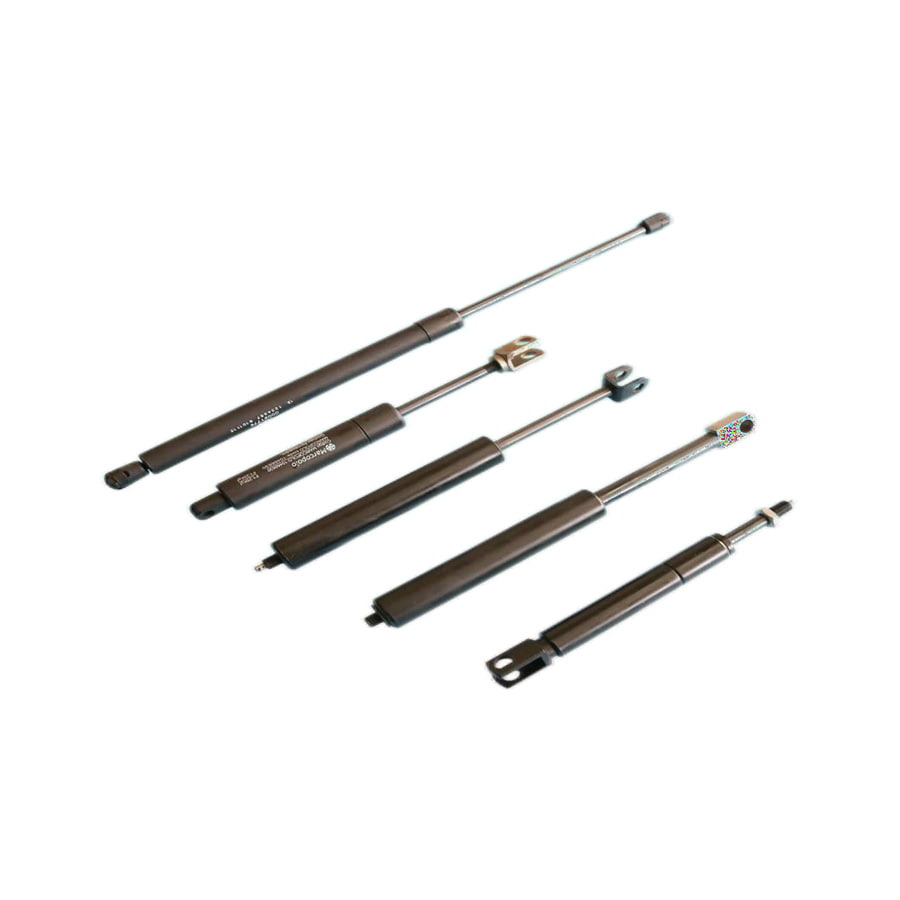
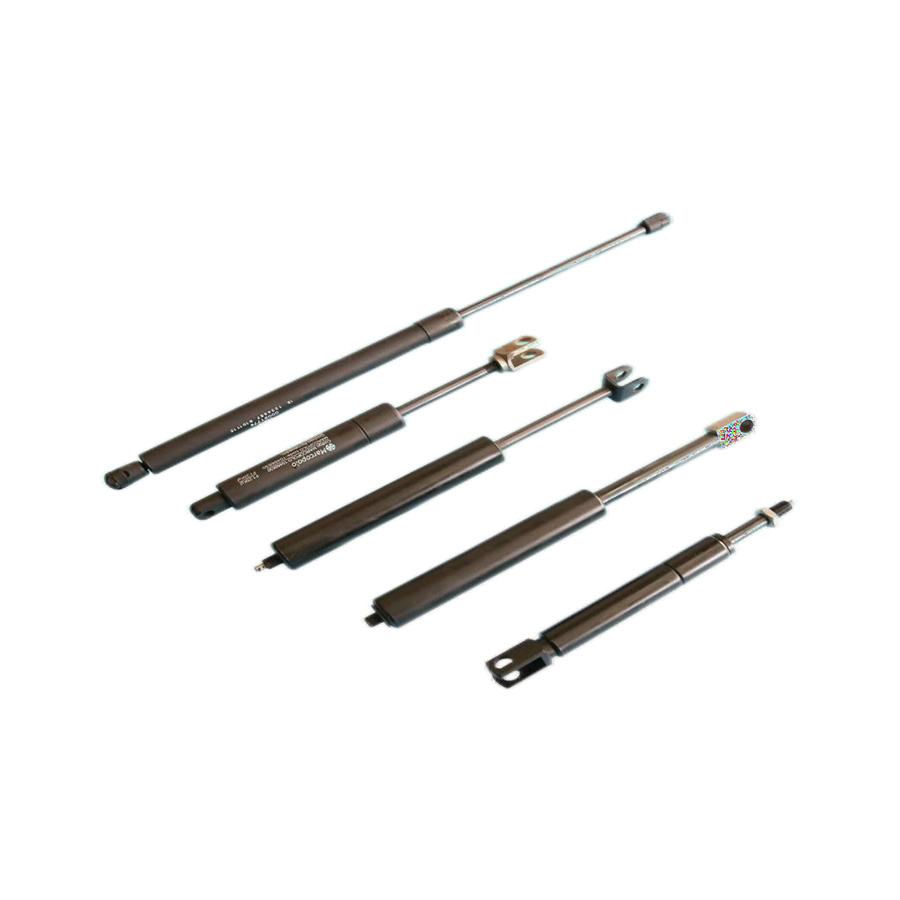
Not every gas spring is built for demanding work. A standard gas strut might handle a lightweight cabinet lid just fine, but put it on an industrial machine guard, a truck toolbox cover, or an agricultural equipment hood, and it'll fail fast. Heavy-duty gas springs are defined by their higher force ratings, larger cylinder diameters, more robust end fittings, and the ability to perform reliably under repeated cycling in harsh environments.
Force is measured in Newtons (N) or pounds (lbs). While a typical furniture gas strut might deliver 100–200N, a heavy-duty industrial gas spring can reach anywhere from 500N all the way up to 5,000N — enough to support lids and panels weighing several hundred pounds. Body diameter also scales up accordingly, with heavy-duty models commonly ranging from 19mm to 70mm in cylinder diameter. If your application involves significant weight, frequent use, temperature extremes, or exposure to moisture and chemicals, you need to be in the heavy-duty category from the start.
The term "heavy-duty gas spring" covers several distinct product types. Choosing the right one depends on what your application actually needs to do — lift, lock, dampen, or tension.
These are the most common type. They are normally in the extended position and push outward when compressed. You'll find them holding open machine hoods, truck caps, RV bed platforms, and industrial equipment lids. They work by using pressurized nitrogen gas sealed inside a cylinder, which pushes against a piston rod to maintain outward force. Heavy-duty compression gas springs can deliver forces from about 20 lbs up to 1,200 lbs or more, depending on the model and cylinder size.
These work in reverse — they pull the application closed rather than pushing it open. They're useful for counterbalancing applications where the component needs to be drawn toward a resting position. Heavy-duty tension springs are common in specialized machinery and medical equipment where controlled retraction is needed.
Locking gas springs hold a panel, door, or lid in any position along their stroke — not just fully open or fully closed. A release mechanism (often a cable or push-button trigger) allows the user to unlock movement. These are critical in applications where the operator needs to pause a heavy lid at mid-point during maintenance, such as on large industrial enclosures or examination tables.
For marine, food processing, and outdoor environments, a standard steel gas spring corrodes quickly. Stainless steel (typically 304 or 316L grade) gas springs resist rust, saltwater, and chemical exposure far better. Note that 304 stainless handles most outdoor and food-grade environments, but for prolonged saltwater contact, 316L is the correct choice.
Dampers look like gas springs but provide no lift force — they only control the speed of movement. Heavy-duty dampers slow down the closing of heavy doors, lids, and covers to prevent slamming and reduce wear on the mechanism. They're often paired with a standard gas spring when both lift assistance and speed control are needed.
Heavy-duty gas struts show up in far more places than most people realize. Below are the primary industries and the specific roles these components play in each.
| Industry | Typical Application | Key Requirement |
|---|---|---|
| Industrial Machinery | Machine guards, enclosure lids, safety hoods | High cycle life, high force |
| Automotive & Trucking | Truck caps, toolbox covers, cargo doors | Weather resistance, reliable force |
| Agricultural Equipment | Tractor hoods, harvester covers, movable panels | Durability in outdoor conditions |
| Aerospace & Military | Access panels, helicopter doors, equipment bays | ISO/AS 9100 compliance, precision |
| Marine | Hatch covers, door mechanisms | Stainless steel, corrosion resistance |
| Medical Equipment | Examination tables, imaging machine panels | Smooth operation, locking capability |
| RV & Recreational | Bed lift platforms, storage bay doors | High load capacity, compact size |
| Food Production | Processing equipment lids, access covers | Stainless steel, easy to clean |
Getting the sizing right is where most buyers run into trouble. The wrong force spec means a lid that slams open aggressively or sags closed under load. Here's how to approach it systematically.
Start with the weight of the panel, lid, or door you need to support. Then identify where the gas spring mounts relative to the hinge. The mounting distance matters because a spring mounted farther from the hinge needs less force to do the same job — it has more mechanical advantage. Most manufacturers provide a counterbalance calculator or design application form to simplify this step.
The stroke is how far the piston rod travels between the fully compressed and fully extended positions. It needs to match the range of motion of your application. Measure the distance the mounting point moves through the full open/close arc, and choose a spring whose stroke covers that travel with some margin.
Gas spring force is temperature-sensitive. Nitrogen gas pressure increases with heat and decreases with cold, which means a spring calibrated at room temperature will be stronger in a hot engine bay and weaker in a cold warehouse. For environments with significant temperature swings, ask your supplier about temperature compensation specs or choose a model with a built-in valve that allows post-installation pressure adjustment.
A standard heavy-duty gas spring typically carries a cycle rating of 50,000 to 100,000 cycles. For applications with very frequent operation — like a production line enclosure opened dozens of times per shift — look for extended-life or "Customline" variants specifically engineered for high-cycle industrial environments. These often meet stricter quality standards such as ISO 9001 and AS 9100C.
End fittings connect the gas spring to your structure. The most common type is a ball socket fitting that snaps onto a ball stud — it allows slight angular misalignment during operation, which prevents side-loading and extends spring life. Clevis brackets, eye fittings, and threaded rod ends are also common options. Always confirm that the ball stud diameter matches the socket (10mm and 13mm are the two most widely used sizes).
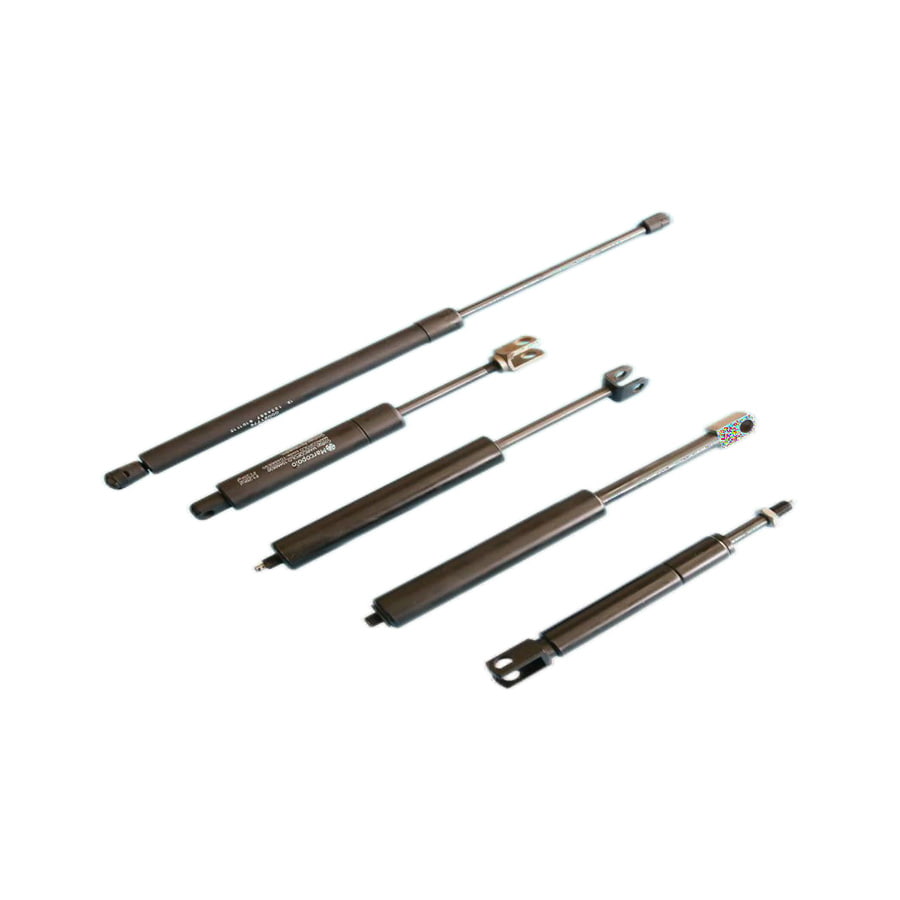
When you're evaluating different heavy-duty gas spring options, these are the numbers and features that actually matter.
Proper installation is non-negotiable with heavy-duty gas springs. An incorrectly mounted spring can fail prematurely, deliver unpredictable force, or create a safety hazard when supporting heavy panels.
Most heavy-duty compression gas springs are designed to operate with the piston rod pointing downward. This keeps the internal oil — which lubricates the seal and provides end-of-stroke damping — in contact with the seal at all times. Operating a standard spring rod-up causes the oil to drain away from the seal, accelerating wear. If your design requires rod-up mounting, confirm with the manufacturer that the model is rated for that orientation.
Gas springs are designed for axial force only. Any lateral or bending force on the rod accelerates seal wear and can cause premature failure. Always use proper ball-socket end fittings rather than rigid fixed mounts, and ensure the spring is allowed to articulate freely through the full range of motion.
Heavy-duty gas springs contain highly pressurized nitrogen gas — up to several thousand PSI in industrial models. Drilling into a cylinder or exposing it to extreme heat can cause a violent rupture. Always dispose of used springs through appropriate channels and never attempt to modify the cylinder body.
In aerospace, military, and other high-stakes environments, safety shroud gas springs enclose the piston rod within a protective sleeve. If the rod were to fracture under load, the shroud contains the failure and prevents projectile hazards for nearby personnel.
Standard catalog gas springs cover a wide range of common sizes and force ratings, and they're the fastest, most cost-effective option for most applications. Off-the-shelf heavy-duty models are available in extended lengths from roughly 6.75 inches to over 64 inches, with forces spanning from 20 lbs to well over 1,200 lbs — enough to solve the majority of industrial lifting and counterbalancing problems without any customization.
However, custom-designed gas springs make sense when your application has unusual stroke requirements, extreme force demands (above 5,000N), non-standard end fittings, specialty coatings for chemical exposure, or very high cycle life requirements beyond what standard products are rated for. Manufacturers that offer full design services can size, configure, and test a custom spring against your exact load conditions, including qualification testing to confirm performance before production quantities are ordered.
A useful rule of thumb: if you can find a standard spring within 10–15% of your calculated force requirement and it fits your physical envelope, start there. If the geometry or force spec is far outside standard ranges, or if the spring is going into a safety-critical assembly, invest in a custom design from the start.
 Category

 English
 中文简体
中文简体 عربى
عربى Español
 +86-13861233850