 2025-09-30
 Robotics has advanced from the realm of research laboratories into everyday life. Machines now assist in medical surgeries, support industrial manufacturing, explore hazardous environments, and provide solutions for logistics and automation. At the core of these machines lies one critical element often overlooked outside technical discussions, the motor shaft. Specifically, high-precision motor shafts form the mechanical backbone of robotic systems, transforming energy into precise motion. Without their accuracy, reliability, and durability, robotic performance would falter.
Content
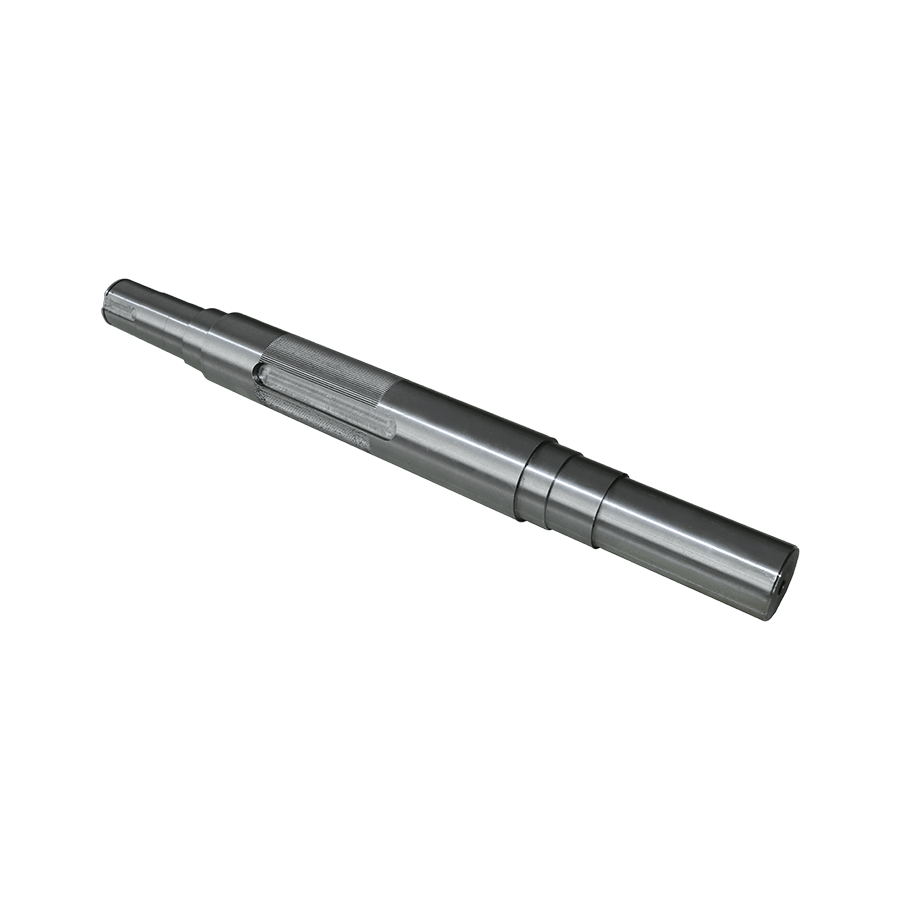
Every robotic system depends on actuators to move joints, rotate wheels, or manipulate tools. Motors generate rotational energy, but to transfer this power to gears, pulleys, or end effectors, a motor shaft is required. The shaft serves as the interface between electrical energy and mechanical motion.
In robotics, movement is rarely random. Tasks such as surgical incisions, assembly of microelectronics, or warehouse navigation demand repeatable and highly accurate motion. Even the smallest deviation in the motor shaft can translate into misaligned joints, reduced efficiency, or mechanical failure. For this reason, high precision is not simply desirable, it is essential.
High-precision motor shafts ensure that motion follows the intended path with minimal deviation. Consider robotic arms in an industrial setting. When placing components onto a circuit board, a positional error of even a fraction of a millimeter can result in defective products. The motor shaft, as the link between motor output and tool motion, must maintain tight tolerances to guarantee that commanded positions match physical outcomes.
In fields like medical robotics, the requirement becomes even more demanding. A surgical robot operating on delicate tissues must deliver controlled and exact movements. Here, the shaft must not only meet dimensional accuracy standards but also sustain stability under variable loads. The higher the precision of the motor shaft, the more reliable the robotic action.
Robotics relies on smooth and stable movements. Vibrations in mechanical systems can create inaccuracies, wear components prematurely, and reduce overall performance. High-precision motor shafts minimize imbalances that could lead to vibration.
The geometry of the shaft plays a central role. Even slight eccentricity or unevenness in the surface finish may introduce oscillations. By maintaining strict roundness, straightness, and surface finish tolerances, high precision shafts reduce sources of instability. As a result, robots achieve steadier motion and improved repeatability.
This stability is especially critical in collaborative robots, which share workspaces with humans. Smooth operation ensures both efficiency and safety, reducing risks associated with erratic or unpredictable movement.
Energy efficiency is a defining factor in robotics, especially for mobile and battery-powered systems. Motor shafts influence efficiency by determining how effectively power is transmitted from the motor to the rest of the drivetrain.
High precision shafts reduce frictional losses and misalignments that otherwise waste energy. A shaft manufactured to exacting tolerances ensures proper fit with bearings and couplings, allowing smooth rotation and minimal resistance. In mobile robots, drones, or autonomous guided vehicles, this efficiency translates into longer operating times and improved productivity.
In industrial environments, energy-efficient robots help reduce operating costs and support sustainability goals. Thus, the role of motor shaft precision extends beyond performance and directly impacts energy conservation.
Robotic systems are expected to perform consistently under demanding conditions. High-precision motor shafts contribute to durability by distributing loads evenly across mechanical interfaces. When shafts are dimensionally accurate, they prevent localized stress concentrations that can lead to fatigue or premature failure.
In heavy-duty robotic applications, such as automated welding or material handling, shafts must withstand not only rotational stresses but also environmental challenges like heat, dust, and vibration. A high precision shaft ensures that even under these conditions, the system maintains performance without frequent replacements or downtime.
For sectors such as aerospace or defense, where maintenance opportunities are limited, the reliability provided by precision components becomes critical. A single failure could compromise an entire mission.
The precision of a motor shaft is not achieved by accident. It depends on careful material selection and advanced manufacturing techniques.
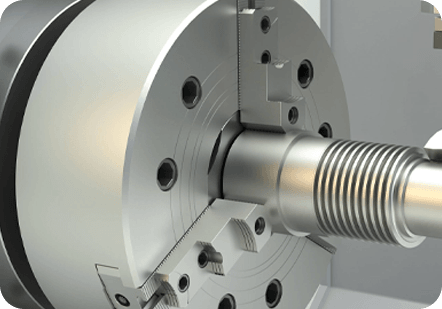
High precision shafts are commonly made from steels, stainless steels, or specialized alloys that balance strength, machinability, and resistance to wear. Heat treatments enhance hardness, while surface finishing processes such as grinding and polishing ensure minimal roughness.
Modern computer numerical control machining allows manufacturers to achieve micrometer-level tolerances, while quality control techniques like coordinate measuring machines confirm accuracy. These processes ensure that shafts meet the demanding standards required by robotics.
As robotics progresses, there is a growing demand for smaller, lighter, and more compact designs. Whether in drones, medical instruments, or consumer robotics, miniaturization requires components that maintain strength and precision at reduced sizes.
High-precision motor shafts make this possible. By enabling compact motors to deliver accurate motion, they support the shrinking dimensions of modern robots without sacrificing performance. In fact, the reliability of small robots often depends more heavily on shaft precision since tolerances become increasingly critical as dimensions decrease.
Robotics today relies heavily on sophisticated motion control algorithms. These systems calculate trajectories, adjust velocities, and ensure that robots adapt to their environments. Yet, no matter how advanced the control software, its effectiveness ultimately depends on mechanical execution.
A high-precision motor shaft acts as the foundation of this execution. It ensures that when the controller issues a movement command, the physical system can follow it faithfully. Without a precise shaft, control systems would constantly compensate for mechanical errors, reducing overall efficiency and accuracy.
The rise of collaborative robots and service robots highlights another dimension of motor shaft precision. Unlike industrial robots that may operate behind safety cages, collaborative robots interact closely with people. In these scenarios, precision shafts provide not only accuracy but also predictable motion behavior, reducing risks of unexpected jolts or misalignments.
Service robots in healthcare, hospitality, or domestic settings benefit from the same reliability. Smooth, accurate movements build user trust and ensure that tasks are performed effectively.
The demand for high-precision motor shafts in robotics will continue to grow as applications expand. Several trends are shaping this demand:
Increased automation requires shafts capable of continuous operation with minimal downtime.
Medical robotics pushes precision to its limits, demanding shafts with near-zero tolerances.
Lightweight mobile robots need compact yet durable shafts to balance performance with energy efficiency.
Artificial intelligence integration will place greater emphasis on accurate motion execution, again relying on mechanical precision.
As robotics evolves, the expectations placed on motor shafts will only intensify. Manufacturers will continue to explore advanced materials, tighter tolerances, and improved surface treatments to meet these challenges.
High-precision motor shafts are the silent enablers of robotics. They ensure accuracy, stability, efficiency, and reliability, all of which are essential for modern robotic systems. From industrial automation to surgical assistance, the performance of robots depends heavily on the integrity of their motor shafts.
Although often hidden within the machinery, these components hold a decisive role. They transform sophisticated electronic signals into predictable and reliable motion, bridging the gap between control and execution. As robotics continues to advance, high-precision motor shafts will remain indispensable, anchoring the field with mechanical reliability that supports innovation.
 Category

 English
 中文简体
中文简体 عربى
عربى Español
 +86-13861233850