 2026-01-04
 CNC machining has become one of the most critical technologies in advanced manufacturing, supporting industries such as aerospace, automotive, medical devices, electronics, and industrial equipment. As manufacturing systems evolve toward higher precision, automation, and customization, CNC machining provides a reliable and scalable solution. Its ability to convert digital designs into highly accurate physical components makes it indispensable in modern production environments where consistency, speed, and quality are non-negotiable.
Content
One of the defining advantages of CNC machining is its exceptional precision. Computer-controlled movements allow machine tools to operate with tight tolerances that are difficult or impossible to achieve through manual machining. This precision is essential in advanced manufacturing, where even minor dimensional deviations can affect product performance, safety, or compliance with industry standards.
Equally important is repeatability. CNC machining ensures that each produced part matches the original design, even across large production batches. This consistency reduces rejection rates, simplifies quality control, and enables manufacturers to maintain stable output levels over long production cycles.
CNC machining integrates seamlessly with computer-aided design (CAD) and computer-aided manufacturing (CAM) software. Engineers can design components digitally, simulate machining processes, and optimize tool paths before any material is cut. This digital workflow minimizes errors, shortens development cycles, and improves communication between design and production teams.
The ability to quickly update designs and translate them directly into machining instructions is especially valuable in advanced manufacturing environments that prioritize rapid iteration and product optimization.
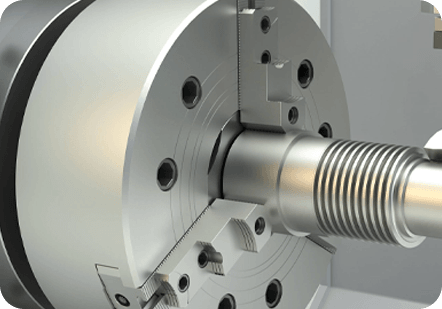
Advanced manufacturing increasingly demands complex geometries and customized components. CNC machining excels in producing intricate shapes, tight internal features, and multi-axis designs that would be challenging with conventional methods. Modern CNC machines can perform milling, turning, drilling, and tapping operations within a single setup.
This flexibility allows manufacturers to serve diverse customer requirements without extensive retooling. Whether producing prototypes or low-to-medium volume custom parts, CNC machining supports agile manufacturing strategies.
CNC machining is compatible with a broad spectrum of materials, including aluminum alloys, stainless steel, titanium, engineering plastics, and composite materials. This versatility enables manufacturers to select materials based on performance requirements such as strength, weight, corrosion resistance, or thermal stability.
In advanced manufacturing, material selection is often application-specific. CNC machining provides consistent results across different materials, ensuring predictable performance regardless of material complexity.
| Material Type | Typical Applications | Key Advantage |
| Aluminum Alloys | Aerospace, electronics | Lightweight and machinable |
| Stainless Steel | Medical, industrial equipment | Strength and corrosion resistance |
| Engineering Plastics | Consumer products, insulation | Electrical and thermal properties |
CNC machining is inherently suited to automation, making it a cornerstone of smart manufacturing systems. Automated tool changers, robotic loading systems, and real-time monitoring enable CNC machines to operate with minimal human intervention. This increases production efficiency and reduces labor dependency.
Integration with sensors and data analytics platforms allows manufacturers to monitor machine performance, predict maintenance needs, and optimize production parameters. These capabilities align CNC machining with Industry 4.0 initiatives and digital factory concepts.
Another key factor that makes CNC machining essential in advanced manufacturing is its scalability. The same CNC program can be used to produce a single prototype or thousands of identical parts. This scalability supports product development workflows that move seamlessly from testing to full-scale production.
Manufacturers benefit from reduced setup costs and faster ramp-up times, which are critical in competitive markets where speed to market influences commercial success.
Advanced manufacturing often operates under strict regulatory and quality requirements. CNC machining supports these demands through precise control over machining parameters and compatibility with inspection technologies such as coordinate measuring machines (CMMs).
Digital records of machining programs and production data provide traceability, making it easier to demonstrate compliance with industry standards and customer specifications.
While CNC machining equipment represents a significant initial investment, it delivers long-term cost efficiency through reduced waste, optimized cycle times, and lower rework rates. Advanced tool path strategies and high-speed machining techniques further improve productivity.
By minimizing material waste and maximizing machine utilization, CNC machining helps manufacturers achieve competitive cost structures without sacrificing quality.
CNC machining has earned its role as a key technology in advanced manufacturing by delivering precision, flexibility, automation readiness, and economic efficiency. Its integration with digital design tools and smart manufacturing systems enables manufacturers to respond effectively to evolving market demands.
As industries continue to pursue higher performance, customization, and sustainability, CNC machining will remain a foundational process supporting innovation and long-term manufacturing competitiveness.
 Category

 English
 中文简体
中文简体 عربى
عربى Español
 +86-13861233850